
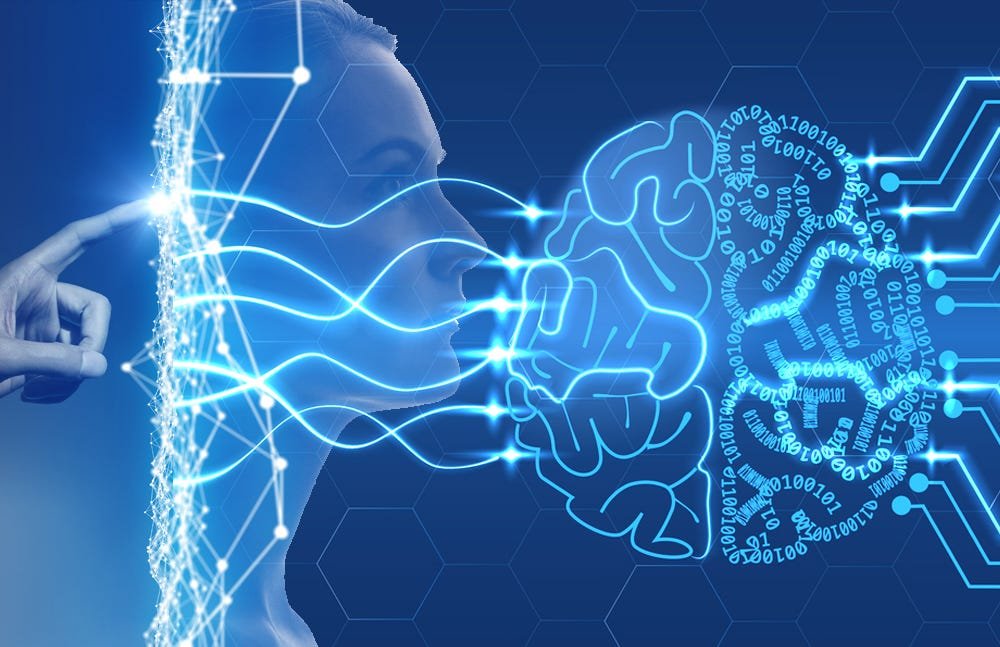
Deep learning neural networks have become the backbone of today’s most sophisticated artificial intelligence systems. These computational models are designed to mimic the way the human brain processes information, enabling machines to recognize patterns, make decisions, and even learn from experience. Their ability to handle vast amounts of data and extract meaningful insights has led to breakthroughs in fields such as computer vision, natural language processing, and autonomous systems.
For those new to the subject, understanding the basics of neural networks can be helpful. A great starting point is the What is a neural network guide, which breaks down the core concepts in simple terms. As we dive deeper, this article will explore how these networks work, their main components, and how they are used to build advanced AI solutions.
Understanding the Foundations of Deep Learning Neural Networks
At their core, deep learning neural networks are composed of layers of interconnected nodes, also known as neurons. Each neuron receives input, processes it using an activation function, and passes the output to the next layer. The “deep” in deep learning refers to the presence of multiple hidden layers between the input and output, allowing the network to learn complex representations of data.
The architecture of these networks can vary greatly, from simple feedforward structures to more intricate designs like convolutional and recurrent neural networks. If you’re interested in a step-by-step breakdown, the Neural network architecture resource provides a detailed explanation of how these layers interact and contribute to the network’s learning process.

Key Components and How They Work
To build effective AI systems, it’s important to understand the essential elements that make up these networks:
- Input Layer: This is where data enters the network. Each node in this layer represents a feature or variable from the dataset.
- Hidden Layers: These layers perform the heavy lifting, transforming inputs through a series of weighted connections and activation functions. The depth and number of hidden layers often determine the network’s ability to model complex relationships.
- Output Layer: The final layer produces the prediction or classification result. For example, in image recognition, this might be the label of an object detected in a photo.
- Weights and Biases: These parameters are adjusted during training to minimize the difference between the predicted and actual outcomes.
- Activation Functions: Functions like ReLU, sigmoid, or softmax introduce non-linearity, enabling the network to learn intricate patterns.
For those seeking a beginner-friendly introduction, the Neural network basics article offers a concise overview of these components and their roles.
Training Deep Neural Networks for AI Applications
The process of training a deep learning neural network involves feeding it large datasets and adjusting its parameters to improve accuracy. This is typically done using a method called backpropagation, where the network’s predictions are compared to the actual results, and errors are used to update the weights and biases.
Training can be computationally intensive, often requiring specialized hardware like GPUs or TPUs. The quality of the training data, the choice of architecture, and the tuning of hyperparameters all play a significant role in the network’s performance.

Common Challenges in Model Training
Despite their power, training deep networks comes with challenges:
- Overfitting: When a model learns the training data too well, it may perform poorly on new, unseen data. Techniques like dropout and regularization help mitigate this issue.
- Vanishing/Exploding Gradients: In very deep networks, gradients can become too small or too large, making training unstable. Solutions include using normalized initialization, batch normalization, or alternative activation functions.
- Data Requirements: Deep models often require vast amounts of labeled data, which can be difficult or expensive to obtain.
Applications of Deep Learning in Advanced AI
The impact of these neural architectures is evident across a range of industries. Some notable applications include:
- Computer Vision: Deep convolutional networks power image classification, object detection, and facial recognition systems.
- Natural Language Processing: Recurrent and transformer-based networks enable language translation, sentiment analysis, and chatbots.
- Healthcare: AI models assist in medical image analysis, disease prediction, and drug discovery.
- Autonomous Vehicles: Self-driving cars rely on deep learning for perception, decision-making, and navigation.
For a more in-depth look at how these networks function and their real-world impact, the introduction to neural networks provides additional context and examples.
Getting Started: Building Your First Deep Neural Network
If you’re eager to experiment with these technologies, there are many frameworks and tools available, such as TensorFlow, PyTorch, and Keras. Here’s a simplified outline of the steps involved in creating a basic model:
- Define the Problem: Choose a task, such as image classification or text analysis.
- Prepare the Data: Collect and preprocess your dataset, ensuring it is clean and properly formatted.
- Design the Network: Select the architecture, number of layers, and activation functions.
- Train the Model: Use your data to adjust the network’s parameters through backpropagation.
- Evaluate and Tune: Assess the model’s performance and make adjustments to improve accuracy.
- Deploy: Integrate the trained model into your application or workflow.
For those looking for practical guidance, the Neural network tutorial offers step-by-step instructions and code examples to help you get started.
Frequently Asked Questions
What makes deep neural networks different from traditional machine learning models?
Unlike traditional models that often require manual feature engineering, deep neural networks automatically learn hierarchical representations from raw data. Their multiple hidden layers enable them to capture complex patterns and relationships that simpler models might miss.
How much data is needed to train a deep learning model?
The amount of data required depends on the complexity of the task and the depth of the network. Generally, deeper models need more data to avoid overfitting and achieve high accuracy. In some cases, techniques like data augmentation or transfer learning can help when data is limited.
Are deep learning models always better than other AI approaches?
Not necessarily. While deep learning excels at tasks involving large, complex datasets (such as images or natural language), simpler models may perform just as well or better on smaller, structured datasets. It’s important to choose the right tool for the specific problem at hand.