
Neural networks have become a foundational technology in artificial intelligence, powering everything from speech recognition to medical diagnostics. As the field has evolved, a diverse range of architectures has emerged, each designed to tackle specific types of problems. Understanding the types of neural networks and where they excel is crucial for anyone interested in machine learning or data science.
This guide explores the most prominent neural network models, their core principles, and the real-world scenarios where they deliver the most value. For those new to this subject, you may find it helpful to review What is a neural network for foundational concepts before diving into the various architectures discussed below.
Understanding the Main Categories of Neural Networks
The landscape of neural network models can be grouped into several main categories, each with distinct structures and use cases. The most common types include feedforward networks, convolutional networks, recurrent architectures, and more specialized forms like generative adversarial networks. Let’s break down these categories and highlight their defining features.
Feedforward Neural Networks: The Foundation of Deep Learning
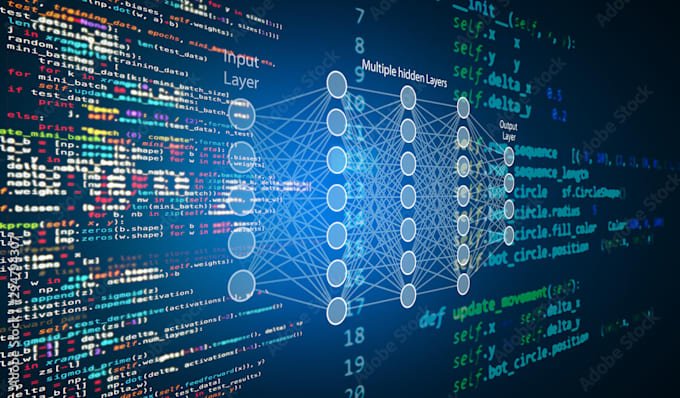
Often considered the simplest form of artificial neural network, feedforward networks process information in a single direction—from input to output—without looping back. Each layer passes its output to the next, culminating in a final prediction or classification.
- Structure: Consists of an input layer, one or more hidden layers, and an output layer.
- Key Application: Used extensively in image classification, regression analysis, and basic pattern recognition tasks.
- Advantages: Easy to implement and train, making them ideal for straightforward problems.
For a step-by-step explanation of how these networks are built, see the neural network architecture guide.
Convolutional Neural Networks: Powering Computer Vision
Convolutional neural networks (CNNs) are designed to process data with a grid-like topology, such as images. They use convolutional layers to automatically extract spatial features, making them highly effective for visual recognition tasks.
- Structure: Includes convolutional layers, pooling layers, and fully connected layers.
- Key Application: Dominant in image and video analysis, facial recognition, and medical imaging.
- Advantages: Excellent at capturing spatial hierarchies and reducing the number of parameters compared to fully connected networks.
CNNs have also been adapted for audio processing and even text analysis, demonstrating their versatility beyond vision tasks.
Recurrent Neural Networks: Handling Sequential Data
Recurrent neural networks (RNNs) are specialized for processing sequences, such as time series data or natural language. Unlike feedforward models, RNNs have loops that allow information to persist, enabling them to capture temporal dependencies.
- Structure: Features connections that feed outputs from previous steps back into the network.
- Key Application: Widely used in speech recognition, language modeling, and financial forecasting.
- Advantages: Capable of modeling complex patterns in sequential data.
However, traditional RNNs can struggle with long-term dependencies, which has led to the development of advanced variants like Long Short-Term Memory (LSTM) and Gated Recurrent Unit (GRU) networks.
Specialized Neural Network Architectures and Their Uses
Beyond the foundational models, several specialized architectures have emerged to address unique challenges in artificial intelligence. These include generative models, graph-based networks, and transformer architectures.
Generative Adversarial Networks: Creating Realistic Data
Generative adversarial networks (GANs) consist of two competing neural networks—a generator and a discriminator. The generator creates data samples, while the discriminator evaluates their authenticity. This adversarial process leads to the creation of highly realistic synthetic data.
- Key Application: Image synthesis, data augmentation, deepfake creation, and art generation.
- Advantages: Capable of producing high-quality, realistic outputs that can be difficult to distinguish from real data.
Graph Neural Networks: Learning from Structured Relationships
Graph neural networks (GNNs) are designed to operate on graph-structured data, where relationships between entities are as important as the entities themselves. GNNs excel at tasks like social network analysis, recommendation systems, and molecular property prediction.
- Key Application: Social graphs, knowledge graphs, and chemistry.
- Advantages: Effectively models complex relationships and interactions in non-Euclidean data.
Transformer Networks: Revolutionizing Language Processing
Transformer architectures have become the backbone of modern natural language processing. Unlike RNNs, transformers use self-attention mechanisms to process entire sequences in parallel, enabling them to handle long-range dependencies efficiently.
- Key Application: Machine translation, text summarization, and large language models such as GPT and BERT.
- Advantages: Highly scalable and capable of capturing context over long sequences.

Choosing the Right Neural Network for Your Project
Selecting the appropriate neural network model depends on the nature of your data and the problem you aim to solve. Here are some general guidelines:
- Image or spatial data: Convolutional neural networks are typically the best choice.
- Sequential or time-series data: Recurrent architectures, especially LSTM or GRU, are well-suited.
- Text and language tasks: Transformer-based models offer state-of-the-art performance.
- Data with complex relationships: Graph neural networks provide the necessary flexibility.
- Data generation or augmentation: Generative adversarial networks are highly effective.
For a more detailed walkthrough on building and training these models, the neural network tutorial offers practical steps and examples.
Real-World Applications of Neural Network Models
The practical uses of neural networks span a wide range of industries and domains. Here are some notable examples:
- Healthcare: CNNs and GANs are used for medical image analysis, disease detection, and drug discovery.
- Finance: RNNs and LSTMs power stock price prediction, fraud detection, and algorithmic trading.
- Retail: Recommendation engines leverage GNNs and deep learning for personalized shopping experiences.
- Transportation: Neural networks enable autonomous driving, route optimization, and traffic prediction.
- Entertainment: GANs and transformers drive content creation, music generation, and video analysis.
To explore more about the mathematics and theory behind these models, visit this comprehensive resource on neural networks.
Frequently Asked Questions
What are the main differences between feedforward and recurrent neural networks?
Feedforward networks process data in a single pass from input to output, making them suitable for tasks where each input is independent. Recurrent networks, on the other hand, have feedback loops that allow them to retain information from previous inputs, making them ideal for sequential or time-dependent data.
Which neural network architecture is best for image recognition?
Convolutional neural networks are widely regarded as the most effective architecture for image recognition and analysis due to their ability to automatically extract spatial features from visual data.
How do generative adversarial networks differ from other types?
Generative adversarial networks use two competing models—a generator and a discriminator—to create new, synthetic data that closely resembles real data. This adversarial training approach is unique compared to other architectures, which typically focus on classification or regression.
Where can I learn more about the basics of neural networks?
For beginners, the neural network basics article provides a clear introduction to fundamental concepts and terminology.