
The rapid advancement of deep learning has transformed how industries and healthcare providers approach image analysis. Among the most influential architectures, U-Net for defect segmentation stands out for its accuracy and flexibility in segmenting objects and anomalies within images. Originally developed for biomedical image segmentation, U-Net has since found applications in a wide range of fields, from identifying tumors in medical scans to detecting surface flaws in manufacturing.
Understanding how U-Net works and why it excels at segmenting defects can help organizations improve quality control, automate inspection processes, and enhance diagnostic accuracy. This article explores the core principles behind U-Net, its practical applications in both medical and industrial settings, and key considerations for deploying it effectively.
For those interested in how computer vision is reshaping inspection workflows, our article on augmented reality in quality audits provides further insights into integrating AI with real-time data visualization.
Understanding the U-Net Architecture
U-Net is a convolutional neural network (CNN) architecture designed specifically for image segmentation tasks. Its defining feature is a symmetric encoder-decoder structure, which enables precise localization of features while preserving contextual information. The “U” shape comes from the way the network contracts (downsamples) and then expands (upsamples) the image, allowing it to capture both global and local details.
The encoder path reduces the spatial dimensions of the input image while increasing the number of feature channels. This helps the model learn abstract representations. The decoder path then reconstructs the segmentation map, using skip connections to combine high-resolution features from the encoder with the upsampled output. These skip connections are crucial for accurately segmenting small or subtle defects.
Why U-Net Excels at Defect Segmentation
The unique design of U-Net makes it highly effective for defect segmentation tasks, especially when dealing with limited training data or when defects vary in size and shape. Some of the key advantages include:
- Precision: The architecture’s skip connections allow for fine-grained localization, which is essential for identifying small or irregular defects.
- Efficiency: U-Net can be trained with relatively few annotated images, making it practical for domains where labeled data is scarce.
- Versatility: It adapts well to both 2D and 3D data, supporting a variety of imaging modalities.
- Open Source: Numerous implementations and pre-trained models are available, lowering the barrier to adoption.
Medical Applications of U-Net-Based Segmentation
In healthcare, accurate segmentation of anatomical structures and pathological regions is critical for diagnosis, treatment planning, and monitoring. U-Net has become a standard tool in medical image analysis due to its ability to delineate complex structures with high accuracy.
- Tumor Detection: U-Net models are widely used to segment tumors in MRI, CT, and ultrasound images, aiding radiologists in identifying cancerous regions.
- Organ Segmentation: Automated delineation of organs such as the liver, heart, and brain streamlines surgical planning and radiation therapy.
- Lesion Analysis: U-Net helps quantify lesion size and progression in chronic diseases, supporting more objective clinical decisions.
The ability to automate these tasks not only improves consistency but also reduces the workload for medical professionals. For more on maintaining accuracy in AI-powered systems, see our guide on monitoring AI model drift in factories, which discusses strategies relevant to both industrial and healthcare contexts.
Industrial Use Cases: Quality Control and Inspection
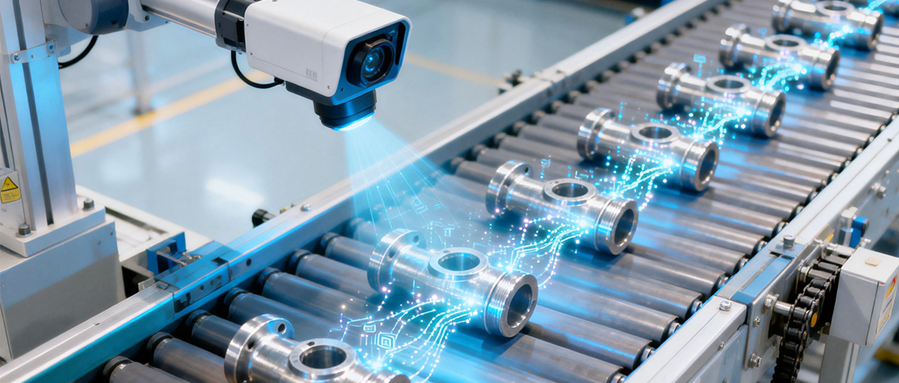
Manufacturing industries rely on defect detection to ensure product quality and minimize waste. U-Net-based segmentation models have been adopted for tasks such as surface inspection, weld analysis, and assembly verification.
- Surface Defect Detection: U-Net can segment scratches, dents, or inclusions on metal, plastic, or glass surfaces, enabling automated inspection lines to flag defective items in real time.
- Weld Inspection: In automotive and aerospace manufacturing, segmenting weld seams helps identify cracks or incomplete joints, improving safety and reliability.
- PCB Analysis: Printed circuit board manufacturers use U-Net to highlight missing components or soldering defects, reducing manual inspection time.

Integrating U-Net with other AI technologies can further enhance inspection systems. For example, combining segmentation with wearable AI for manual inspection support enables real-time feedback for operators, while advanced models like vision transformers for industrial use offer complementary capabilities for complex visual tasks.
Challenges and Best Practices for U-Net Deployment
While U-Net offers significant benefits, deploying it in real-world environments comes with challenges:
- Data Quality: High-quality, well-annotated training data is essential for reliable segmentation. Inconsistent labeling or poor image quality can degrade performance.
- Model Generalization: Models trained on one dataset may not perform well on new data due to differences in lighting, materials, or imaging equipment. Regular retraining and validation are necessary.
- Computational Resources: Running U-Net models, especially on high-resolution images, can require substantial GPU resources for real-time applications.
- Hyperparameter Tuning: Optimizing model parameters, such as learning rate and batch size, is crucial for achieving the best results. For more on this, see our article on hyperparameter tuning for inspection models.
To address these challenges, organizations should invest in robust data pipelines, continuous monitoring, and regular updates to their segmentation models.
Comparing U-Net with Other Segmentation Approaches
While U-Net is widely used, alternative architectures such as Fully Convolutional Networks (FCN), SegNet, and DeepLab also offer strong performance in certain scenarios. U-Net’s main advantage lies in its ability to work well with limited data and its straightforward implementation. However, for extremely large datasets or tasks requiring multi-scale context, other models may be more suitable.
Recent research, such as the application of deep learning for defect detection in manufacturing, highlights how hybrid approaches and model ensembles can further improve accuracy and robustness.
Future Directions and Innovations
The field of image segmentation is evolving rapidly. Innovations such as attention mechanisms, transformer-based models, and self-supervised learning are being integrated with U-Net to push the boundaries of what’s possible. In both medical and industrial domains, the focus is shifting toward real-time, explainable, and scalable solutions that can adapt to changing environments.
As organizations continue to digitize their operations, the demand for automated, reliable defect segmentation will only grow. Staying informed about the latest developments and best practices ensures that businesses and healthcare providers can leverage these tools for maximum impact.
Frequently Asked Questions
What makes U-Net suitable for defect segmentation in both medical and industrial fields?
U-Net’s encoder-decoder structure with skip connections enables it to capture both global context and fine details, making it highly effective for segmenting small or irregular defects. Its flexibility allows it to be applied to various imaging modalities, from medical scans to industrial surface inspections.
How much annotated data is needed to train a U-Net model for defect detection?
One of U-Net’s strengths is its ability to perform well with relatively small datasets, thanks to its architecture and data augmentation techniques. However, the quality and consistency of annotations are crucial for achieving reliable results.
Can U-Net be combined with other AI models for better performance?
Yes, U-Net can be integrated with other deep learning models, such as vision transformers or classification networks, to enhance segmentation accuracy and provide additional insights. Combining multiple approaches often leads to more robust and adaptable inspection systems.