

Minimizing unplanned production stoppages is a top priority for manufacturers and service providers alike. Downtime reduction through quality monitoring is a proven approach that leverages data, technology, and process optimization to keep operations running smoothly. By proactively identifying and addressing quality issues, organizations can prevent disruptions, boost productivity, and maintain customer satisfaction.
This article explores how effective monitoring practices, advanced tools, and a culture of continuous improvement can significantly decrease unplanned outages. We’ll also highlight practical steps, real-world technologies, and the organizational benefits of integrating quality-focused monitoring into daily operations.
For organizations seeking to modernize their approach, quality compliance monitoring systems can provide a robust foundation for automated checks and real-time alerts, helping teams act before minor issues escalate into major disruptions.
Understanding Downtime and Its Impact
Unplanned downtime refers to any period when equipment, production lines, or digital services are unexpectedly unavailable. These interruptions can be caused by equipment failures, quality defects, human error, or supply chain issues. The consequences are far-reaching: lost production, increased costs, delayed deliveries, and even reputational damage.
According to industry studies, manufacturers can lose thousands of dollars per minute during unscheduled stoppages. Service providers face similar risks, with customer churn and SLA penalties adding to the pressure. Reducing these incidents is not just about fixing machines—it’s about building resilient processes that catch problems before they cause a halt.
Key Elements of Quality Monitoring for Downtime Prevention
Implementing a comprehensive monitoring framework is essential for minimizing disruptions. The following components form the backbone of an effective strategy:
- Real-time data collection: Sensors, IoT devices, and software platforms continuously track equipment status, performance metrics, and environmental factors.
- Automated alerts and notifications: When anomalies or deviations are detected, the system immediately notifies relevant personnel, enabling rapid response.
- Root cause analysis: Historical data and analytics tools help teams identify recurring issues and underlying causes, supporting long-term improvements.
- Predictive maintenance: By analyzing trends and patterns, organizations can schedule maintenance before failures occur, reducing both planned and unplanned downtime.
- Continuous improvement: Regular reviews and feedback loops ensure that monitoring processes evolve with changing operational needs.
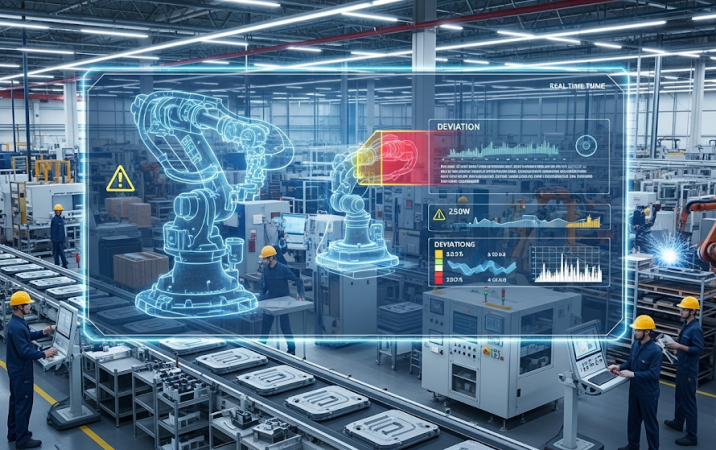
Technologies Enabling Proactive Quality Control
Modern manufacturing and service environments rely on a range of digital tools to support downtime reduction through quality monitoring. Some of the most impactful technologies include:
- Digital twins: Virtual replicas of physical assets allow for simulation, monitoring, and predictive analytics, making it easier to foresee and prevent failures.
- Machine learning algorithms: AI-driven models analyze vast amounts of operational data to detect subtle patterns that may indicate emerging issues.
- Integrated quality management systems: Centralized platforms consolidate data from multiple sources, streamlining reporting and decision-making.
- Wearable AI devices: Tools such as smart glasses and sensors support manual inspection and help operators identify defects in real time. For more on this, see wearable ai for manual inspection support.
These technologies not only increase visibility but also empower teams to act quickly, reducing the risk of extended outages.
Best Practices for Implementing Monitoring Strategies
To maximize the benefits of quality-focused monitoring, organizations should follow these best practices:
- Define clear objectives: Establish what you want to achieve, such as reducing stoppages by a specific percentage or improving first-pass yield.
- Engage stakeholders: Involve operators, maintenance staff, and quality teams in designing and refining monitoring processes.
- Standardize data collection: Ensure consistency in how data is gathered, labeled, and stored to facilitate accurate analysis.
- Act on insights: Use data-driven findings to prioritize corrective actions and preventive measures.
- Review and adapt: Regularly assess the effectiveness of your monitoring strategy and make adjustments as needed.

Benefits of Reducing Downtime with Quality Monitoring
Organizations that invest in robust monitoring systems experience a range of advantages:
- Increased productivity: Fewer interruptions mean more consistent output and higher equipment utilization.
- Lower maintenance costs: Early detection of issues reduces the need for emergency repairs and extends asset life.
- Improved product quality: Continuous monitoring helps catch defects early, resulting in fewer recalls and returns.
- Enhanced safety: Proactive identification of hazards protects workers and reduces liability.
- Greater customer satisfaction: Reliable delivery schedules and consistent quality strengthen client relationships.
These outcomes contribute directly to profitability and long-term business sustainability.
Integrating Monitoring with Broader Quality Initiatives
Downtime prevention should not occur in isolation. Integrating monitoring with broader quality and digital transformation efforts amplifies results. For instance, leveraging augmented reality in quality audits can provide operators with real-time visualizations of data, making it easier to spot and address issues on the shop floor.
Similarly, staying informed about advancements such as the future of autonomous quality control and hyperparameter tuning for inspection models ensures that your monitoring strategy remains cutting-edge and effective.
Real-Time Monitoring: A Game Changer
One of the most significant advancements in recent years is the shift toward real-time monitoring. By continuously tracking equipment status, process parameters, and product quality, organizations can react to issues as they arise—often before they result in downtime. For a deeper understanding of this approach, see this comprehensive overview of real-time monitoring techniques.
Real-time systems not only provide immediate alerts but also enable predictive analytics, helping teams anticipate and prevent future problems. This proactive stance is essential for maintaining high levels of operational efficiency in today’s fast-paced environments.
FAQ: Downtime Reduction and Quality Monitoring
How does quality monitoring help prevent unplanned downtime?
By continuously tracking process and equipment performance, quality monitoring systems can detect anomalies, deviations, or early signs of failure. This allows teams to address issues before they escalate into full-blown stoppages, minimizing the risk and duration of unplanned outages.
What are the most important features to look for in a monitoring solution?
Key features include real-time data collection, automated alerts, integration with existing systems, user-friendly dashboards, and advanced analytics capabilities. The ability to customize thresholds and reporting is also valuable for adapting to specific operational needs.
Can small and medium-sized businesses benefit from these strategies?
Absolutely. While large enterprises may have more resources, many modern monitoring tools are scalable and affordable for smaller organizations. Even simple sensor-based systems or cloud-based platforms can deliver significant improvements in uptime and product quality.