
In the world of manufacturing and operations, two terms often come up when discussing performance: production efficiency and productivity. While they sound similar and are sometimes used interchangeably, these concepts have distinct meanings and implications for businesses aiming to optimize their processes. Understanding the difference between these two metrics is essential for managers, engineers, and anyone involved in process improvement.
This article explores the core distinctions between efficiency and productivity in production environments, explains how each is measured, and offers practical advice for improving both. For those interested in leveraging advanced technologies to enhance manufacturing outcomes, exploring traceability in AI-driven manufacturing can provide additional insights into process optimization.
Defining Production Efficiency in Manufacturing
Production efficiency is a measure of how well a manufacturing process converts inputs (such as raw materials, energy, and labor) into outputs (finished goods) with minimal waste. It focuses on maximizing output while minimizing resources used, defects, and downtime. In essence, efficiency is about doing things right—using the least amount of resources to achieve the desired result.
For example, if a factory produces 1,000 units using 1,200 units of input material, but could theoretically achieve the same output with only 1,100 units of input, there is room to improve efficiency. Reducing waste, optimizing machine settings, and minimizing idle time are all strategies to enhance this metric.

Understanding Productivity in the Production Context
Productivity, on the other hand, measures the amount of output produced per unit of input over a specific period. It is typically expressed as units produced per hour, per worker, or per machine. Productivity answers the question: how much is being produced relative to the resources invested?
For instance, if a team of five workers produces 500 units in an eight-hour shift, their productivity is 12.5 units per worker per hour. Unlike efficiency, which zeroes in on resource utilization and waste reduction, productivity is about maximizing output, regardless of how many resources are consumed.
Comparing Efficiency and Productivity: Key Distinctions
The debate around production efficiency vs productivity often centers on their different focuses. While both are crucial for operational success, they serve different purposes:
- Efficiency is about minimizing waste and optimizing processes. It asks, “Are we using our resources wisely?”
- Productivity is about maximizing output. It asks, “How much are we producing with what we have?”
It’s possible for a process to be highly productive but not efficient—producing a lot of goods but wasting resources. Conversely, a process can be efficient but not productive if it uses resources wisely but produces less than its potential.
How to Measure and Improve Efficiency and Productivity
Calculating Efficiency in Production
Efficiency is often calculated using the following formula:
Efficiency (%) = (Actual Output / Theoretical Maximum Output) × 100
Improving efficiency involves identifying sources of waste, such as defective products, machine downtime, or excess energy use. Techniques like Lean Manufacturing, Six Sigma, and Total Productive Maintenance (TPM) are commonly used to boost efficiency.
Measuring Productivity in Operations
Productivity is typically measured as:
Productivity = Output / Input
Inputs can be labor hours, machine hours, or material quantities. Increasing productivity might involve automating repetitive tasks, cross-training employees, or upgrading equipment to produce more in less time.
Why Both Metrics Matter for Manufacturers
Focusing solely on one metric can lead to suboptimal results. For example, pushing for higher productivity without regard for efficiency can increase costs and waste. Conversely, optimizing efficiency without considering output can result in underutilized capacity.
The most successful manufacturers strive to balance both metrics. By doing so, they can produce more goods at a lower cost, with less waste, and higher quality. This balance is especially important in competitive industries where margins are tight and customer expectations are high.
For those seeking to address challenges like limited data for process improvement, exploring overcoming data scarcity in inspection can offer practical strategies for enhancing both efficiency and productivity.
Real-World Applications and Examples
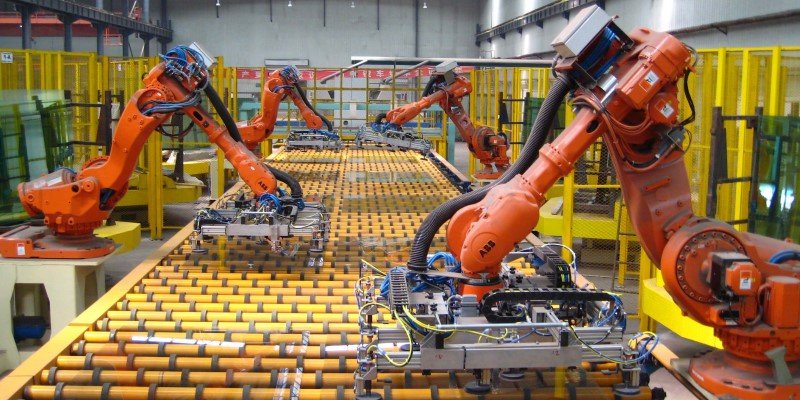
Consider a car assembly plant. If the plant installs new robotics that reduce assembly time per vehicle, productivity increases. However, if these robots consume more energy or require frequent maintenance, efficiency may suffer. The goal is to find solutions that improve both metrics simultaneously—such as energy-efficient robots that require less downtime.
Another example is in food processing, where reducing the amount of raw material wasted during packaging improves efficiency, while increasing the speed of packaging lines boosts productivity. Integrating both approaches leads to better overall performance.
Strategies for Enhancing Both Efficiency and Productivity
- Automate repetitive tasks: Automation can increase output and reduce errors, benefiting both metrics.
- Implement continuous improvement programs: Regularly review processes to identify bottlenecks and waste.
- Invest in employee training: Skilled workers can operate machinery more effectively and adapt to new technologies.
- Leverage data and analytics: Use real-time data to monitor performance and make informed decisions.
- Maintain equipment proactively: Preventive maintenance reduces downtime and ensures consistent output.
For a deeper dive into how technology can support these goals, see this resource on improving production efficiency with digital tools.
FAQ: Common Questions About Efficiency and Productivity in Production
What is the main difference between efficiency and productivity in manufacturing?
Efficiency focuses on minimizing waste and using resources wisely, while productivity measures the amount of output produced per unit of input. Both are important, but they address different aspects of performance.
Can a process be efficient but not productive?
Yes. A process can use resources very effectively (high efficiency) but still produce fewer goods than its potential (low productivity), often due to underutilized capacity or slow cycle times.
How can manufacturers improve both efficiency and productivity at the same time?
Manufacturers can adopt automation, continuous improvement practices, employee training, and data-driven decision-making to enhance both metrics. The key is to identify solutions that reduce waste while also increasing output.
Why is it important to balance efficiency and productivity?
Focusing on only one metric can lead to higher costs or missed opportunities. Balancing both ensures that resources are used wisely and that output meets demand, supporting profitability and competitiveness.