

As manufacturing and industrial processes become increasingly automated, the need for reliable, accurate, and scalable inspection methods has never been greater. AI inspection algorithms are transforming quality control by enabling machines to detect defects, measure dimensions, and ensure product consistency at speeds and accuracies unattainable by human inspectors. Understanding the different approaches used in these systems is essential for manufacturers aiming to improve efficiency and maintain high standards.
In this article, we’ll explore the main types of AI inspection algorithms used in industrial automation, how they work, and where each excels. If you’re new to this field or want a deeper dive into the fundamentals, you may also find value in this detailed guide on what is an ai-driven inspection system.
Overview of AI-Powered Inspection in Industry
Automated inspection powered by artificial intelligence is a cornerstone of modern manufacturing. These systems use a combination of cameras, sensors, and advanced algorithms to analyze products on production lines, identifying defects or deviations from standards in real time. By leveraging machine learning and computer vision, manufacturers can achieve higher throughput, reduce waste, and minimize costly recalls.
The choice of inspection algorithm depends on the specific application, the types of defects to be detected, and the complexity of the products being manufactured. Below, we’ll break down the most common categories and their practical uses.
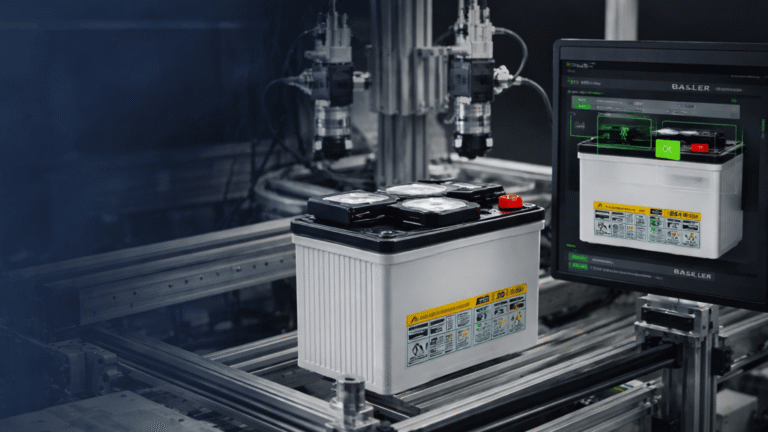
Supervised Learning Algorithms for Visual Inspection
Supervised learning is one of the most widely used approaches in automated inspection. These algorithms are trained on labeled datasets containing examples of both acceptable and defective products. The system learns to distinguish between normal and abnormal features, making it highly effective for tasks where defect types are well-known and can be clearly defined.
- Convolutional Neural Networks (CNNs): These deep learning models excel at image classification and object detection. In industrial settings, CNNs are used to identify surface defects, scratches, dents, or missing components on assembly lines.
- Support Vector Machines (SVMs): SVMs are effective for binary classification tasks, such as pass/fail decisions in quality control, especially when the dataset is not extremely large.
- Random Forests and Decision Trees: These algorithms can be used for both classification and regression tasks, such as predicting defect severity or categorizing types of faults.
The main advantage of supervised methods is their high accuracy when trained on comprehensive, high-quality data. However, they require ongoing maintenance and retraining as new defect types emerge or product designs change.
Unsupervised and Semi-Supervised Inspection Techniques
In many manufacturing environments, it’s not always feasible to collect labeled data for every possible defect. Unsupervised learning algorithms address this challenge by learning the normal patterns of products and flagging anomalies without explicit defect labels.
- Autoencoders: These neural networks are trained to reconstruct input images. If an image contains an anomaly, the reconstruction error increases, signaling a potential defect.
- Clustering Algorithms (e.g., K-means): Used to group similar data points, these can help identify outliers or unusual patterns that may indicate defects.
- Principal Component Analysis (PCA): Often used for dimensionality reduction, PCA can highlight variations from the norm, making it easier to spot subtle defects.
Semi-supervised learning combines small amounts of labeled data with large volumes of unlabeled data, making it practical for environments where defects are rare or hard to label. These approaches can adapt to new defect types and are valuable for continuous improvement in dynamic production lines.
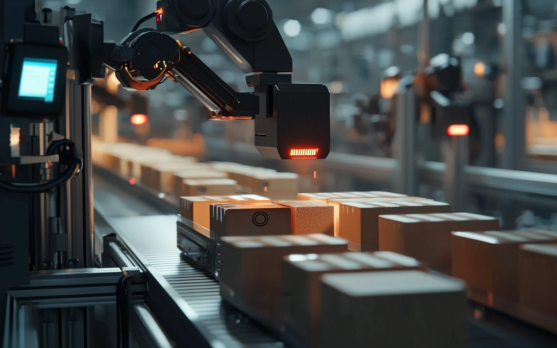
Rule-Based and Hybrid AI Inspection Approaches
While machine learning dominates the landscape, traditional rule-based algorithms still play a role in many inspection systems. These rely on predefined thresholds, geometric measurements, or logical rules to detect deviations. For example, a rule-based system might flag any product whose length falls outside a specified range.
Increasingly, manufacturers are adopting hybrid inspection systems that combine rule-based logic with AI models. This allows for rapid initial screening using simple rules, followed by deeper analysis with machine learning for ambiguous cases. Hybrid approaches offer a balance between speed, interpretability, and adaptability.
Deep Learning and Advanced Computer Vision in Automated Inspection
The most advanced inspection systems leverage deep learning and sophisticated computer vision techniques. Beyond CNNs, architectures such as transformers and generative adversarial networks (GANs) are being explored for their ability to detect subtle defects, generate synthetic training data, and adapt to new products with minimal retraining.
- Object Detection Models (e.g., YOLO, Faster R-CNN): These models can locate and classify multiple defects in a single image, making them ideal for complex assemblies.
- Semantic Segmentation: This technique assigns a class label to each pixel in an image, enabling precise localization of defects such as cracks, stains, or contamination.
- GANs for Data Augmentation: GANs can create realistic synthetic images of defects, helping to overcome the challenge of limited labeled data for rare faults.
These advanced methods are particularly valuable in industries such as electronics, automotive, and pharmaceuticals, where defect detection requires both high resolution and adaptability.
Choosing the Right Inspection Algorithm for Your Application
Selecting the best algorithm depends on several factors:
- Nature of Defects: Are defects well-defined and frequent, or rare and unpredictable?
- Data Availability: Is there enough labeled data to train supervised models, or is unsupervised learning more practical?
- Speed Requirements: Does the inspection need to occur in real time, or can it be performed offline?
- Complexity of Products: Are products simple and uniform, or do they have many variations and intricate features?
For a deeper look at how AI solutions are enhancing quality control, you may want to read this comprehensive overview of AI-based quality control.
Benefits and Challenges of AI-Based Inspection Methods
The adoption of AI inspection algorithms brings significant benefits, including increased accuracy, reduced labor costs, and the ability to scale inspection across multiple lines or facilities. Automated systems can operate continuously, providing consistent results and detailed analytics for process improvement.
However, challenges remain. Developing and maintaining high-quality datasets, ensuring model robustness against new defect types, and integrating AI systems with existing production infrastructure require careful planning and expertise. Manufacturers must also address concerns around explainability and compliance, especially in regulated industries.
Future Trends in Automated Inspection Technologies
As AI continues to evolve, inspection systems are becoming more autonomous, adaptive, and connected. Integration with the Industrial Internet of Things (IIoT), cloud-based analytics, and real-time feedback loops is enabling predictive maintenance and smarter manufacturing. Advances in edge computing are also making it possible to deploy powerful inspection algorithms directly on production lines, reducing latency and data transfer costs.
For organizations looking to stay ahead, investing in flexible, upgradable inspection platforms and ongoing workforce training will be key to realizing the full potential of AI-driven quality control.
FAQ: Understanding AI Inspection in Industrial Automation
What are the main differences between supervised and unsupervised inspection algorithms?
Supervised algorithms require labeled data and are trained to recognize known defects, offering high accuracy for specific tasks. Unsupervised algorithms learn normal patterns and flag anomalies, making them suitable for detecting unexpected or rare defects without extensive labeling.
How do hybrid inspection systems work?
Hybrid systems combine rule-based logic with AI models. They use simple rules for initial screening and apply machine learning for more complex or ambiguous cases, balancing speed and adaptability.
Can AI inspection algorithms adapt to new product designs?
Yes, many modern algorithms, especially those using deep learning or semi-supervised learning, can be retrained or fine-tuned to accommodate new products or defect types, supporting flexible and scalable quality control.
Where can I learn more about implementing AI inspection in manufacturing?
For a comprehensive introduction, see what is an ai-driven inspection system. For practical steps on improving production processes, explore guides on how to implement lean manufacturing step by step and how to improve production scalability.