

Unsupervised learning for anomaly detection has become a cornerstone in modern data analysis, especially where labeled data is scarce or unavailable. This approach empowers systems to automatically identify unusual patterns, defects, or outliers in vast datasets without prior knowledge of what constitutes “normal” or “abnormal.” As industries increasingly rely on automation and artificial intelligence, understanding how these techniques operate is essential for maintaining quality, security, and operational efficiency.
From manufacturing lines to cybersecurity, the ability to spot anomalies early can prevent costly errors and improve overall system reliability. In this guide, we’ll break down the core principles, popular algorithms, practical applications, and best practices for leveraging unsupervised models in anomaly detection tasks. We’ll also highlight how these methods differ from supervised approaches and why they are particularly valuable in real-world scenarios where anomalies are rare or constantly evolving.
For those interested in related advancements, exploring augmented reality in quality audits can provide additional insights into how visual data and AI are transforming inspection processes.
Understanding the Basics of Unsupervised Anomaly Detection
At its core, unsupervised learning for anomaly detection involves algorithms that analyze data without using predefined labels. The main objective is to identify data points that deviate significantly from the majority, which are considered anomalies or outliers. Unlike supervised methods, which require a labeled dataset indicating which examples are normal and which are not, unsupervised techniques work with raw, unlabeled data.
These models operate under the assumption that anomalies are rare and differ in measurable ways from the bulk of the data. By learning the underlying structure or distribution of the dataset, the algorithms can flag observations that do not fit the established patterns. This makes unsupervised approaches highly adaptable, especially in environments where anomalies are unpredictable or new types of defects may emerge over time.
Key Algorithms Used in Unsupervised Learning for Anomaly Detection
Several algorithms are commonly employed to detect anomalies without supervision. Each has its strengths and is suited to different types of data and use cases. Here are some of the most widely used methods:
- Clustering-Based Methods: Algorithms like K-means or DBSCAN group data into clusters based on similarity. Data points that do not belong to any cluster or are far from cluster centers are flagged as anomalies.
- Density-Based Techniques: These methods, such as Local Outlier Factor (LOF), measure the density of data points in the feature space. Points in low-density regions are considered outliers.
- Autoencoders: Neural network models that learn to compress and reconstruct data. High reconstruction error indicates that the input is unusual compared to the training data, signaling a potential anomaly.
- Principal Component Analysis (PCA): PCA reduces the dimensionality of data and highlights points that do not conform to the main directions of variance, making them easier to spot as outliers.
- Isolation Forest: This tree-based method isolates anomalies by randomly partitioning the data. Anomalies are easier to isolate and thus require fewer splits, making them stand out.
Choosing the right algorithm depends on the nature of your data, the expected types of anomalies, and computational constraints. In many industrial applications, a combination of these methods can yield robust results.
Applications in Industry and Quality Control
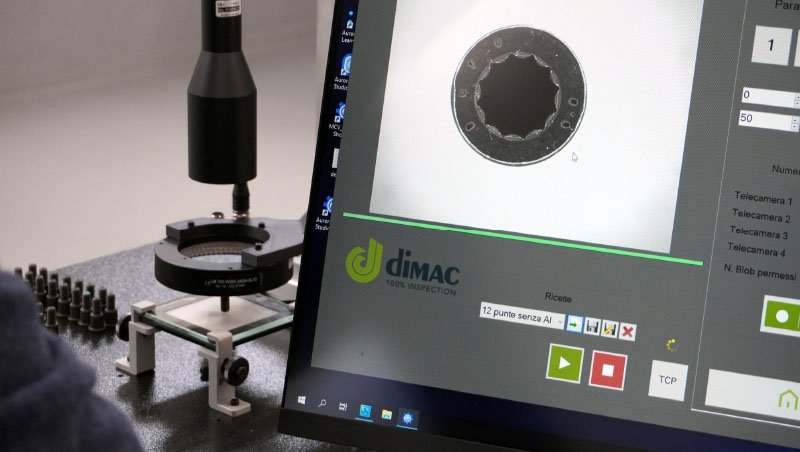
Unsupervised anomaly detection is widely used across sectors where early identification of defects or irregularities is critical. In manufacturing, for example, these techniques help monitor production lines, catch defective products, and ensure consistent quality. By analyzing sensor data, images, or process logs, unsupervised models can automatically flag items that deviate from normal operating conditions.
For a deeper look at how AI is transforming quality control, see this overview of AI benefits in manufacturing quality control.
Beyond manufacturing, unsupervised anomaly detection is used in:
- Cybersecurity, to identify unusual network activity or potential breaches
- Healthcare, for flagging abnormal patient data or diagnostic images
- Finance, to detect fraudulent transactions or market manipulation
- Energy and utilities, for monitoring equipment health and predicting failures
These applications demonstrate the versatility and value of unsupervised approaches in environments where new or unknown anomalies may surface at any time.

Advantages and Challenges of Unsupervised Approaches
There are several reasons why organizations choose unsupervised learning for anomaly detection:
- No Need for Labeled Data: These methods are ideal when labeled examples of anomalies are unavailable or too costly to obtain.
- Adaptability: Unsupervised models can adapt to new types of anomalies, making them suitable for dynamic environments.
- Scalability: Many algorithms can handle large volumes of data, which is essential in industrial and IoT settings.
However, there are also challenges to consider:
- False Positives: Without labels, distinguishing between true anomalies and rare but normal events can be difficult, leading to false alarms.
- Parameter Sensitivity: Many algorithms require careful tuning of parameters (e.g., number of clusters, density thresholds) to perform well.
- Interpretability: Explaining why a particular data point was flagged as an anomaly can be challenging, especially with complex models like autoencoders.
To address these challenges, it’s important to combine domain expertise with algorithmic insights. Regularly reviewing flagged anomalies and refining model parameters can help reduce false positives and improve detection accuracy. For further optimization strategies, consider reading about hyperparameter tuning for inspection models.
Best Practices for Deploying Unsupervised Anomaly Detection
Successfully implementing unsupervised models for anomaly detection requires a thoughtful approach. Here are some best practices to maximize effectiveness:
- Data Preprocessing: Clean and normalize your data to ensure that algorithms can accurately capture underlying patterns.
- Feature Engineering: Selecting relevant features or creating new ones can significantly improve model performance.
- Model Selection: Test multiple algorithms to determine which works best for your specific dataset and anomaly types.
- Continuous Monitoring: Regularly assess model performance and update as new data becomes available. This is especially important in environments where data distributions may shift over time. For more on this, see monitoring ai model drift in factories.
- Human-in-the-Loop: Involve domain experts to validate flagged anomalies and provide feedback for ongoing improvement.
By following these steps, organizations can build robust systems that not only detect anomalies but also adapt to changing conditions and evolving threats.
Comparing Unsupervised and Supervised Anomaly Detection
While unsupervised learning for anomaly detection offers flexibility and adaptability, it’s important to understand how it differs from supervised approaches. Supervised methods rely on labeled datasets where examples of both normal and abnormal cases are known. These models can achieve high accuracy when sufficient labeled data is available, but they struggle in scenarios where anomalies are rare or new types of outliers emerge.
Unsupervised techniques, on the other hand, do not require labeled data and can discover previously unknown anomalies. However, they may generate more false positives and require more effort to interpret results. In practice, many organizations use a combination of both approaches, leveraging the strengths of each depending on the availability of data and the specific requirements of the application.
FAQ: Common Questions About Unsupervised Anomaly Detection
What types of data can unsupervised anomaly detection handle?
These methods are versatile and can be applied to various data types, including numerical, categorical, time-series, and image data. The choice of algorithm and preprocessing steps may vary depending on the data’s structure and complexity.
How do I reduce false positives in unsupervised models?
Reducing false positives often involves fine-tuning algorithm parameters, improving data quality, and incorporating domain knowledge. Regularly reviewing flagged anomalies and adjusting thresholds or model settings can help minimize unnecessary alerts.
Can unsupervised anomaly detection adapt to new types of anomalies?
Yes, one of the main advantages of these techniques is their ability to adapt to new or evolving patterns in the data. By continuously retraining or updating models with fresh data, systems can remain effective even as the nature of anomalies changes over time.
As industries continue to automate and digitize their operations, the ability to identify irregularities without extensive labeled data is becoming increasingly valuable. By understanding the principles and best practices outlined here, organizations can harness the power of unsupervised learning to enhance quality control, security, and operational efficiency across a wide range of applications.