

The rapid evolution of machine vision has transformed how manufacturers, logistics providers, and quality assurance teams approach visual inspection. As automation and artificial intelligence become more accessible, organizations are faced with a critical decision: should they invest in 3D vision or rely on 2D AI inspection systems? Each technology offers distinct advantages and limitations, making the choice highly dependent on application requirements, budget, and long-term goals.
Understanding the differences between these two approaches is essential for making informed decisions that drive productivity and ensure product quality. In this article, we’ll explore the core principles behind both methods, compare their strengths, and provide practical guidance for selecting the most suitable solution for your operations.
For those interested in related advancements, our article on augmented reality in quality audits explores how visualization tools are further enhancing data-driven inspections.
Understanding the Fundamentals: 2D AI Inspection Explained
2D AI inspection leverages traditional camera systems combined with artificial intelligence algorithms to analyze flat images of objects or surfaces. These systems excel at detecting surface-level defects, verifying labels, reading barcodes, and checking for presence or absence of components. The process typically involves capturing a high-resolution image and running it through a trained deep learning or machine learning model to identify anomalies.
Key benefits of 2D-based inspection include:
- Cost-effectiveness: 2D cameras and lighting setups are generally more affordable and easier to deploy.
- Speed: High frame rates and rapid processing make them suitable for fast-moving production lines.
- Simplicity: Integration with existing automation systems is straightforward, and training AI models on 2D data is well-established.
However, 2D systems have limitations. They struggle with objects that have complex geometries, variable heights, or require depth perception. Shadows, reflections, and varying lighting conditions can also impact accuracy.
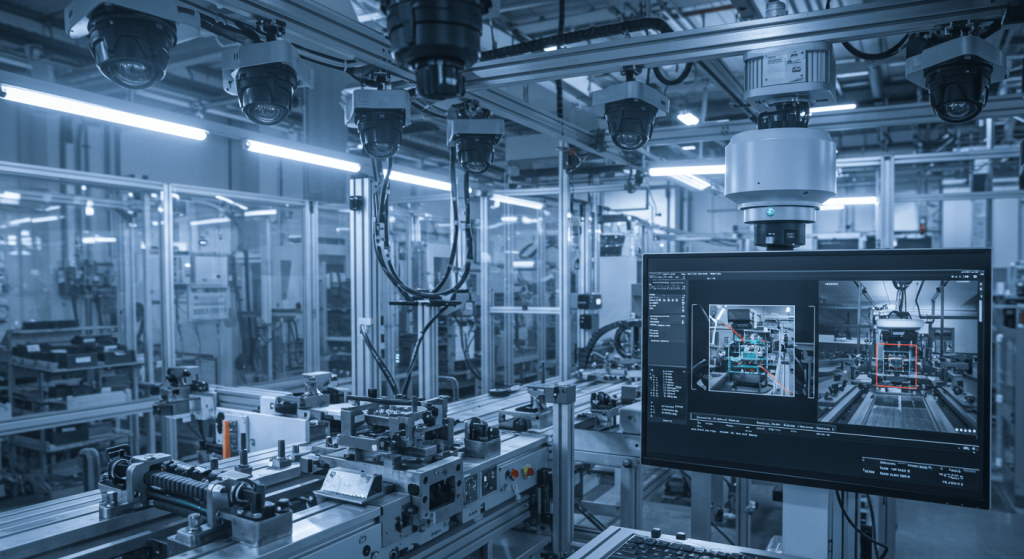
Going Beyond Flat Images: The Power of 3D Vision Systems
3D vision introduces depth and spatial awareness to the inspection process. By capturing three-dimensional data through technologies such as structured light, stereo vision, or laser triangulation, these systems generate a digital model of the object under inspection. This enables the detection of volumetric defects, measurement of object dimensions, and analysis of features that are impossible to assess with 2D images alone.
Advantages of 3D-based inspection include:
- Depth perception: Accurately measures height, volume, and surface topology.
- Complex object analysis: Ideal for inspecting parts with varying shapes, holes, or raised features.
- Reduced sensitivity to lighting: 3D sensors are less affected by shadows and reflections.
Despite these strengths, 3D solutions tend to be more expensive and require more sophisticated integration and calibration. Processing 3D data also demands greater computational resources, which can impact throughput if not properly managed.
Comparing 3D Vision and 2D AI Inspection: Key Differences
When evaluating 3D vision vs 2D AI inspection for your application, several critical factors should be considered:
| Aspect | 2D AI Inspection | 3D Vision |
|---|---|---|
| Data Type | Flat images (X, Y) | Spatial data (X, Y, Z) |
| Defect Detection | Surface-level, visible flaws | Surface and volumetric flaws |
| Cost | Lower initial investment | Higher equipment and setup costs |
| Speed | High-speed, suitable for fast lines | Slower due to data volume |
| Complexity | Simpler integration | Requires advanced setup |
| Best Use Cases | Label checks, surface defects, OCR | 3D measurements, shape analysis, bin picking |
The choice between these two technologies often comes down to the specific inspection requirements, the nature of the products, and the desired balance between cost and capability.
Application Scenarios: When to Use Each Technology
Selecting the right vision system hinges on understanding your operational needs:
- Choose 2D AI inspection when inspecting flat objects, printed materials, or when high-speed throughput is essential. Common industries include electronics, packaging, and pharmaceuticals.
- Opt for 3D vision if your products have varying heights, require precise dimensional checks, or involve complex shapes. Automotive, aerospace, and logistics often benefit from 3D systems for tasks like bin picking and assembly verification.
In some advanced scenarios, combining both approaches can yield the most robust results. For example, a 2D system might verify surface print quality, while a 3D sensor checks for correct assembly or deformation.
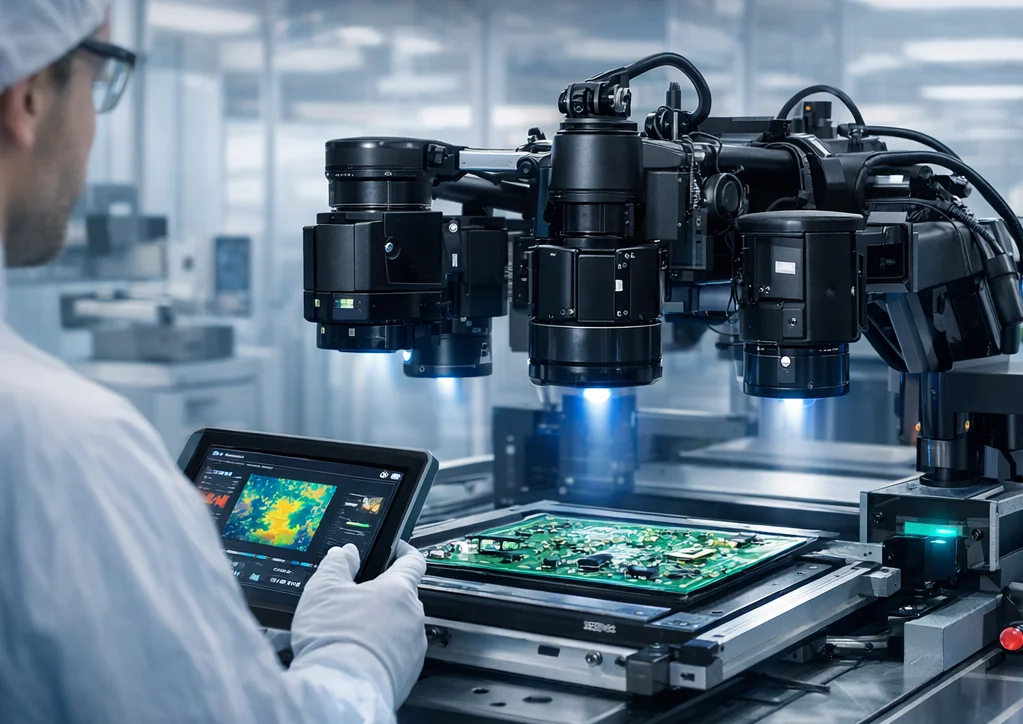
Integrating AI and Deep Learning in Visual Inspection
Artificial intelligence has significantly enhanced both 2D and 3D inspection systems. Deep learning models can now identify subtle defects, adapt to new product variations, and reduce false positives. For a deeper dive into how neural networks are transforming visual inspection, see this analysis of deep learning’s role in machine vision.
The integration of AI also enables predictive maintenance, real-time analytics, and continuous improvement of inspection accuracy. However, successful implementation depends on high-quality training data, regular model updates, and careful monitoring for drift. For more on maintaining model accuracy, our article on monitoring AI model drift in factories offers practical strategies.
Factors to Consider Before Making a Decision
Before selecting a vision solution, evaluate the following:
- Nature of Defects: Are you looking for surface flaws or volumetric inconsistencies?
- Product Geometry: Are objects flat or do they have complex shapes and varying heights?
- Speed Requirements: What is the required inspection throughput?
- Budget Constraints: What are the initial and ongoing costs?
- Integration Complexity: How easily can the system be integrated into your existing workflow?
- Scalability: Will your inspection needs evolve over time?
By carefully considering these factors, you can align your investment with your operational goals and ensure a future-proof solution.
Emerging Trends and Future Outlook
The boundaries between 2D and 3D inspection are becoming increasingly blurred as hybrid systems and advanced AI models emerge. Technologies like vision transformers for industrial use are pushing the limits of what machine vision can achieve, enabling more nuanced and context-aware inspections.
Additionally, wearable AI devices and augmented reality are making it possible for human inspectors to collaborate with automated systems, further enhancing accuracy and efficiency. For insights into these trends, see our coverage on wearable AI for manual inspection support.
FAQ
What are the main differences between 2D and 3D vision systems?
2D systems analyze flat images and are ideal for surface-level inspections, while 3D systems capture spatial data, allowing for depth measurement and the detection of volumetric defects. The choice depends on the complexity of the objects and the types of defects you need to identify.
Can 2D AI inspection be upgraded to 3D vision later?
While some components, such as AI models, can be adapted, upgrading from 2D to 3D often requires new hardware (cameras, sensors) and software integration. It’s important to assess future needs during initial planning to avoid costly retrofits.
How does AI improve the accuracy of visual inspection?
AI, especially deep learning, enables systems to learn from large datasets, recognize subtle or complex defects, and adapt to new product variations. This results in higher accuracy, fewer false positives, and improved consistency compared to traditional rule-based approaches.
Conclusion
Choosing between 3D and 2D AI inspection technologies is a strategic decision that impacts quality, efficiency, and competitiveness. By understanding the strengths and limitations of each approach, and considering your unique operational requirements, you can implement a solution that delivers lasting value. As machine vision continues to advance, staying informed and adaptable will ensure your inspection processes remain at the forefront of innovation.