

Predictive maintenance and quality link is a concept that’s transforming how manufacturers and industrial organizations manage equipment and product standards. By combining smart monitoring, data analysis, and automation, companies can predict when machines need attention and ensure consistent product quality. This approach helps reduce downtime, cut costs, and improve customer satisfaction.
Understanding how these two areas—predictive maintenance and quality assurance—connect is essential for anyone involved in production, engineering, or operations. In this article, we’ll break down the basics, explore the technologies involved, and show how linking these strategies can deliver real business value.
For organizations looking to minimize production interruptions, integrating downtime reduction through quality monitoring strategies is a practical first step. This approach not only supports predictive maintenance but also strengthens the connection between equipment health and product quality.
What Is Predictive Maintenance?
Predictive maintenance uses real-time data and analytics to anticipate equipment failures before they occur. Unlike traditional maintenance, which relies on fixed schedules or waiting for breakdowns, predictive methods leverage sensors, machine learning, and historical data to identify signs of wear, misalignment, or other issues.
Key benefits include:
- Reducing unexpected machine failures
- Lowering maintenance costs by servicing only when needed
- Extending equipment lifespan
- Improving safety and reliability
For example, vibration sensors on a conveyor motor can detect subtle changes that indicate a bearing is wearing out. Maintenance teams can then intervene before a costly breakdown halts production.
How Quality Monitoring Fits In
Quality monitoring involves tracking product characteristics and process parameters to ensure outputs meet required standards. This can include measuring dimensions, surface finishes, or chemical properties, often using automated inspection systems.
When quality issues are detected early, manufacturers can adjust processes, reduce waste, and avoid defective products reaching customers. Modern quality systems often use digital twins, vision systems, and statistical analysis to provide real-time feedback.
Connecting Predictive Maintenance and Quality Assurance
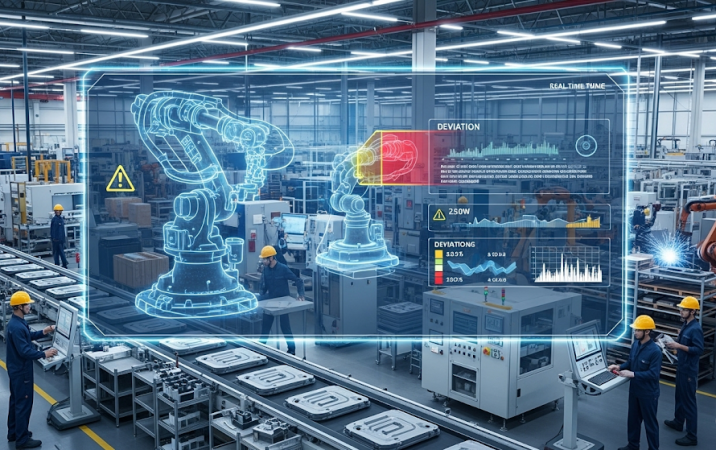
The link between predictive maintenance and quality is stronger than ever thanks to advances in industrial automation and data analytics. When equipment is well-maintained, it operates within optimal parameters, reducing the risk of producing off-spec products. Conversely, quality monitoring data can reveal subtle machine issues before they cause major failures.
Here’s how the connection works in practice:
- Sensor data from machines is analyzed for both maintenance and quality insights.
- Quality deviations can trigger maintenance checks, and vice versa.
- Integrated dashboards allow teams to see the full picture—equipment health and product quality—in one place.
This synergy helps organizations move from reactive to proactive management, reducing both downtime and defects.
Technologies Enabling the Predictive Maintenance and Quality Link
Several technologies make it possible to connect predictive maintenance with quality monitoring:
- IoT Sensors: Collect real-time data on temperature, vibration, pressure, and more.
- Machine Learning: Algorithms analyze patterns and predict failures or quality deviations.
- Digital Twins: Virtual models of equipment and processes help simulate and optimize performance.
- Automated Inspection: Cameras and sensors detect defects or process drift instantly.
- Cloud Platforms: Centralize data for analysis and reporting across multiple sites.
For a deeper look at how real-time monitoring supports these strategies, see this guide to real-time monitoring in industrial environments.

Benefits of Integrating Maintenance and Quality Data
When predictive maintenance and quality monitoring systems are connected, organizations gain several advantages:
- Faster Problem Detection: Quality issues often signal underlying equipment problems. Linking systems helps teams act quickly.
- Reduced Waste: Early identification of process drift prevents large batches of defective products.
- Optimized Maintenance: Maintenance is performed based on actual need, not just time intervals.
- Improved Compliance: Automated records support audits and traceability requirements.
- Lower Costs: Less downtime and fewer defects translate to significant savings.
For example, if a packaging line starts producing slightly misaligned boxes, quality monitoring will detect the issue. Maintenance teams can then check for worn guides or faulty actuators before the problem escalates. This approach is explored further in resources like packaging line quality monitoring and batch quality monitoring systems.
Implementing a Unified Strategy
To get the most from predictive maintenance and quality integration, organizations should:
- Assess Current Systems: Identify what data is already being collected and where gaps exist.
- Standardize Data Collection: Use compatible sensors and platforms to ensure seamless data sharing.
- Invest in Analytics: Machine learning and AI tools can uncover hidden patterns and predict issues.
- Train Teams: Cross-functional training helps maintenance and quality teams collaborate effectively.
- Monitor and Adjust: Continuously review performance and refine strategies as needed.
It’s also important to consider digital traceability in production, which provides end-to-end visibility and supports both maintenance and quality initiatives. Learn more about this approach in the article on digital traceability in production.
Challenges and Considerations
While the benefits are clear, integrating predictive maintenance with quality monitoring does present challenges:
- Data Silos: Separate systems can make it hard to share information across departments.
- Change Management: Teams may need to adapt to new workflows and technologies.
- Initial Investment: Upgrading sensors, software, and training requires upfront resources.
- Data Quality: Inaccurate or incomplete data can lead to false alarms or missed issues.
Overcoming these hurdles often requires executive support, clear communication, and a phased approach to implementation.
Real-World Applications and Industry Trends
Industries such as automotive, food and beverage, pharmaceuticals, and electronics are already seeing results from linking predictive maintenance with quality control. For example, automotive manufacturers use sensor data to predict tool wear, which helps maintain tight tolerances and avoid defects. In food processing, temperature and humidity sensors help ensure product safety and consistency.
Emerging trends include:
- Edge Computing: Processing data closer to the source for faster response times.
- AI-Driven Insights: Advanced algorithms that learn from both maintenance and quality data.
- Remote Monitoring: Allowing experts to diagnose issues without being onsite.
- Integration with ERP Systems: Connecting operational data with business systems for better decision-making.
Precision manufacturing monitoring is another area where these strategies are converging, enabling companies to maintain tight tolerances and high product standards. More information can be found in resources about precision manufacturing monitoring.
FAQ
How does predictive maintenance help improve product quality?
By identifying equipment issues before they impact production, predictive maintenance ensures machines operate within optimal parameters. This reduces the risk of producing defective products and supports consistent quality.
What types of data are used to connect maintenance and quality monitoring?
Common data sources include sensor readings (vibration, temperature, pressure), inspection results, process parameters, and historical maintenance records. Combining these datasets provides a comprehensive view of both equipment health and product quality.
Is it expensive to implement integrated predictive maintenance and quality systems?
While there can be upfront costs for sensors, software, and training, the long-term savings from reduced downtime, less waste, and improved efficiency often outweigh the investment. Many organizations start small and scale up as they see results.