
Identifying packaging defects with AI is rapidly transforming how manufacturers, brands, and quality assurance teams protect their products and reputation. As consumer expectations for flawless packaging rise and supply chains become more complex, the need for advanced, reliable inspection methods has never been greater. Artificial intelligence is now at the forefront, offering automated, scalable, and highly accurate solutions that go far beyond traditional manual checks.
For companies aiming to maintain high standards and safeguard their brand image, leveraging AI-driven inspection systems is no longer optional—it’s essential. These systems can detect subtle flaws, inconsistencies, and anomalies in packaging that human inspectors might miss, ensuring that only products meeting strict criteria reach the market. In this article, we’ll explore how AI is reshaping defect detection, the benefits for brand protection, and practical considerations for implementation.

AI-powered inspection is just one facet of the digital transformation in quality control. For those interested in related advancements, exploring augmented reality in quality audits can provide additional insights into how technology is enhancing visual data analysis and decision-making on the factory floor.
How AI Enhances Packaging Defect Detection
Traditional inspection methods often rely on human operators to visually examine packaging for defects such as misprints, incorrect labels, damaged seals, or contamination. While experienced inspectors can catch many issues, fatigue, subjectivity, and the sheer volume of products can lead to errors and inconsistencies. This is where AI-based packaging inspection excels.
Modern AI systems use computer vision and deep learning algorithms to analyze high-resolution images or video streams of packaging in real time. These models are trained on vast datasets containing examples of both acceptable and defective packaging, enabling them to learn subtle patterns and deviations. As a result, AI can:
- Detect minute defects that are difficult for the human eye to spot
- Maintain consistent inspection standards across shifts and locations
- Process thousands of items per hour without fatigue
- Adapt to new defect types as more data is collected

Key Benefits for Brand Protection
Packaging is often the first touchpoint a customer has with a product. Even minor defects—such as smudged printing, misaligned labels, or damaged seals—can erode consumer trust and harm a brand’s reputation. By leveraging AI for defect identification, brands can ensure that only products meeting strict quality standards reach the market.
Some of the most significant advantages include:
- Reduced recalls and returns: Early detection of packaging issues prevents defective products from reaching consumers, minimizing costly recalls and returns.
- Consistent brand image: Automated inspection ensures uniformity and quality, reinforcing a positive perception of the brand.
- Regulatory compliance: Many industries have strict packaging regulations. AI helps companies stay compliant by catching errors before products leave the facility.
- Data-driven improvements: AI systems generate valuable data on defect trends, enabling continuous process optimization and root cause analysis.
Types of Packaging Defects Detected by AI
AI-driven systems can identify a wide range of packaging flaws, including:
- Print defects (blurred, missing, or incorrect text and graphics)
- Label misplacement or skew
- Seal integrity issues (incomplete or broken seals)
- Contamination (foreign particles, dust, or residue)
- Color inconsistencies
- Surface damage (scratches, dents, or punctures)
- Barcode and QR code readability problems
The flexibility of AI models allows them to be retrained or fine-tuned as new defect types emerge or packaging designs change, ensuring ongoing relevance and effectiveness.
Implementing AI-Based Inspection in Manufacturing
Adopting AI for packaging quality control involves several key steps:
- Data collection: Gather a comprehensive dataset of packaging images, covering both normal and defective examples.
- Model training: Use deep learning frameworks to train models capable of distinguishing between acceptable and flawed packaging.
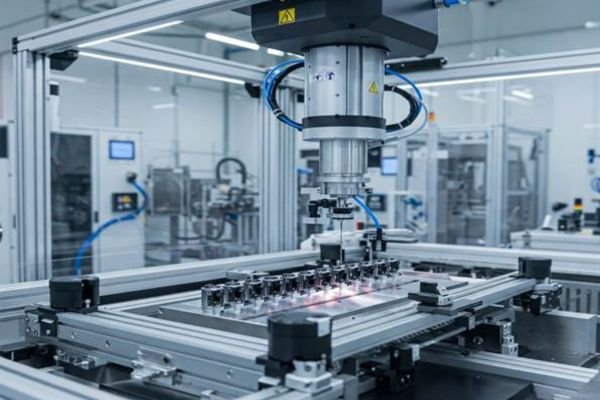
- System integration: Deploy AI models on production lines, integrating with existing cameras and automation systems.
- Continuous monitoring: Regularly assess model performance and update training data to account for new defect types or packaging changes.
For organizations concerned about maintaining the accuracy of their AI models over time, learning about monitoring AI model drift in factories can be invaluable. This ensures inspection systems remain reliable as production conditions evolve.
Challenges and Considerations in AI-Driven Defect Detection
While the advantages are clear, implementing AI-based inspection is not without challenges. Some common considerations include:
- Data quality: High-quality, representative image data is essential for effective model training.
- Edge cases: Rare or unusual defects may require additional data or specialized models.
- Integration: Seamless integration with existing production lines and IT infrastructure is crucial for real-time operation.
- Change management: Training staff and adjusting workflows to accommodate AI-driven processes can require time and resources.
Despite these hurdles, the long-term benefits for brand protection and operational efficiency make AI a compelling investment for manufacturers.
AI and the Future of Packaging Quality Control
The landscape of packaging inspection is evolving rapidly. As AI models become more sophisticated, they are increasingly capable of handling complex packaging designs, variable lighting conditions, and high-speed production environments. Innovations such as vision transformers for industrial use are pushing the boundaries of what automated inspection can achieve.
Moreover, AI systems are now being combined with other technologies—such as wearable AI for manual inspection support—to provide real-time assistance to human operators and further enhance quality assurance processes.
For a deeper dive into the technical aspects of visual inspection, the article deep learning for visual inspection offers a comprehensive overview of how neural networks are being applied to industrial quality control.
Best Practices for Maximizing AI Inspection ROI
To fully realize the benefits of identifying packaging defects with AI, organizations should follow these best practices:
- Start with a pilot project to validate AI performance on your specific packaging types
- Continuously collect and label new defect data to improve model accuracy
- Collaborate with experienced AI solution providers for seamless deployment
- Regularly review inspection results and adjust thresholds as needed
- Integrate AI insights with broader quality management systems for end-to-end traceability
FAQ
How does AI detect packaging defects more effectively than manual inspection?
AI systems use deep learning and computer vision to analyze images of packaging at high speed and with consistent accuracy. Unlike human inspectors, AI does not suffer from fatigue or subjectivity, allowing it to spot subtle or rare defects that might otherwise go unnoticed.
What types of packaging flaws can AI identify?
AI can detect a wide variety of defects, including print errors, label misplacement, seal integrity issues, contamination, color inconsistencies, and barcode readability problems. Its flexibility allows it to adapt to new defect types as more data becomes available.
Is it difficult to implement AI-based inspection in existing production lines?
While integration requires careful planning, most modern AI inspection systems are designed to work with standard industrial cameras and automation equipment. With the right data and support, deployment can be achieved with minimal disruption to existing workflows.