
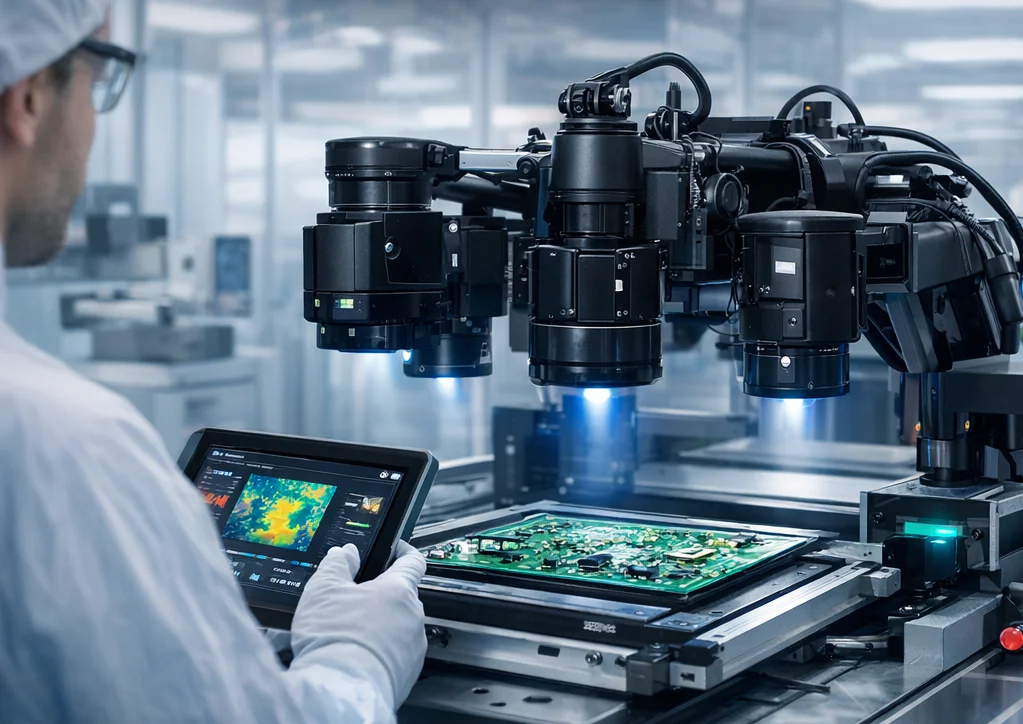
Subsea inspection with autonomous AI is transforming how industries monitor and maintain underwater assets. As offshore energy, telecommunications, and marine infrastructure expand, the need for reliable, efficient, and safe inspection methods grows. Traditional underwater inspections often involve high costs, significant human risk, and logistical challenges. By integrating artificial intelligence with autonomous vehicles and smart sensors, organizations can now achieve continuous, precise, and cost-effective monitoring of deep-sea environments.
The adoption of AI-driven systems is not limited to subsea applications. Similar advances are reshaping quality control and process optimization across industrial sectors. For example, the use of augmented reality in quality audits is enhancing data visualization and decision-making in manufacturing. These developments highlight the broader trend of leveraging intelligent automation to improve safety, accuracy, and efficiency.
How AI-Powered Subsea Inspections Work
Modern underwater inspection systems combine autonomous vehicles—such as remotely operated vehicles (ROVs) and autonomous underwater vehicles (AUVs)—with advanced AI algorithms. These systems are equipped with high-resolution cameras, sonar, laser scanners, and specialized sensors. The AI component processes data in real time, enabling the vehicle to recognize patterns, detect anomalies, and adapt its inspection path without human intervention.
Subsea inspection with autonomous AI leverages machine learning models trained on vast datasets of underwater images and sensor readings. These models can identify corrosion, cracks, biofouling, and other potential threats to subsea infrastructure. By automating detection and classification, AI reduces the need for manual review and speeds up the reporting process.
Key Benefits of Autonomous Deep Sea Monitoring
The shift toward AI-driven underwater inspection offers several advantages:
- Enhanced Safety: Reduces the need for divers in hazardous environments, minimizing human risk.
- Continuous Monitoring: Enables round-the-clock surveillance, detecting issues early and preventing costly failures.
- Cost Efficiency: Lowers operational expenses by reducing vessel time, labor, and downtime.
- Improved Accuracy: AI algorithms can detect subtle defects and changes that may be missed by human inspectors.
- Scalability: Multiple autonomous units can cover large areas simultaneously, making it feasible to monitor extensive subsea networks.
These benefits are particularly valuable for offshore oil and gas platforms, wind farms, pipelines, and undersea cables, where regular inspection is critical for operational integrity and environmental protection.
Technologies Behind Intelligent Underwater Inspection
The success of subsea inspection with autonomous AI relies on a combination of hardware and software innovations. Key technologies include:
- Edge Computing: Processing data locally on the vehicle for real-time decision making.
- Computer Vision: Using deep learning to analyze video and imagery for defect detection and classification.
- Sensor Fusion: Integrating data from sonar, lidar, and other sensors to build comprehensive models of underwater structures.
- Navigation and Localization: Advanced algorithms for precise positioning and path planning in challenging subsea conditions.

These components work together to enable robust, autonomous operations in environments where GPS is unavailable and conditions can change rapidly.
Applications Across Industries
AI-powered subsea inspection is being adopted in a range of sectors:
- Oil & Gas: Inspecting pipelines, risers, and subsea manifolds for corrosion, leaks, and structural integrity.
- Renewable Energy: Monitoring offshore wind turbine foundations and cables to ensure reliability.
- Telecommunications: Surveying undersea fiber optic cables for damage or displacement.
- Marine Research: Supporting environmental monitoring and biodiversity studies.
- Shipping & Ports: Assessing hulls, docks, and underwater infrastructure for maintenance needs.
The flexibility of autonomous systems allows them to be customized for specific inspection tasks, from routine surveys to emergency response.
Challenges and Considerations in AI-Driven Underwater Monitoring
While the advantages are clear, implementing subsea inspection with autonomous AI comes with challenges:
- Data Quality: Underwater environments can be murky, with low visibility and variable lighting, making image analysis difficult.
- Model Drift: AI models may lose accuracy over time as conditions change, requiring ongoing monitoring and retraining. For more on this, see monitoring AI model drift in factories.
- Communication: Transmitting large volumes of data from deep sea to surface can be slow and unreliable.
- Regulatory Compliance: Inspections must meet industry standards and reporting requirements.
Addressing these issues involves continuous improvement of AI models, robust hardware design, and collaboration with regulatory bodies.
Future Trends in Smart Subsea Inspection
The field is evolving rapidly, with several trends shaping the future of underwater monitoring:
- Integration with Digital Twins: Creating virtual models of assets for predictive maintenance and scenario planning.
- Swarm Robotics: Deploying fleets of smaller autonomous vehicles for collaborative inspection and mapping.
- Edge AI Advances: More powerful onboard processing for faster, more sophisticated analysis.
- Cross-Industry Learning: Applying lessons from other sectors, such as AI for quality control in manufacturing, to enhance subsea inspection techniques.
As these technologies mature, the scope and reliability of autonomous underwater inspections will continue to expand, offering even greater value to asset owners and operators.
Best Practices for Deploying AI in Subsea Environments
Organizations looking to implement AI-driven underwater inspection should consider the following steps:
- Define Clear Objectives: Identify the specific assets, risks, and inspection goals.
- Choose the Right Platform: Select autonomous vehicles and sensors suited to the environment and task.
- Invest in Training Data: Gather diverse, high-quality datasets to train and validate AI models.
- Plan for Model Maintenance: Establish processes for monitoring, updating, and retraining AI algorithms as conditions evolve.
- Integrate with Existing Systems: Ensure smooth data flow and reporting between inspection platforms and asset management tools.
By following these practices, companies can maximize the benefits of intelligent inspection while minimizing operational risks.
Related Innovations in Industrial AI
The principles behind subsea inspection with autonomous AI are being applied to other areas of industrial automation. For instance, wearable AI for manual inspection support is helping human inspectors in factories, while vision transformers for industrial use are improving the accuracy of visual inspections. Techniques like hyperparameter tuning for inspection models are also critical for optimizing AI performance in challenging environments.
Frequently Asked Questions
What types of defects can AI-based subsea inspection systems detect?
AI-powered underwater inspection systems can identify a wide range of issues, including corrosion, cracks, weld defects, biofouling, leaks, and structural deformations. The accuracy depends on the quality of training data and the capabilities of the deployed sensors.
How does autonomous AI improve safety in underwater inspections?
By automating inspection tasks, these systems reduce the need for human divers in hazardous environments. This minimizes exposure to risks such as strong currents, deep water pressure, and potential equipment failures, making operations safer and more reliable.
Can AI models adapt to changing underwater conditions?
Yes, but ongoing monitoring and retraining are essential. Environmental factors like turbidity, lighting, and biological growth can affect model accuracy. Regular updates and the use of diverse training datasets help maintain reliable performance over time.