

As cities expand and industries grow, the need to maintain critical infrastructure—such as bridges, roads, pipelines, and factories—has never been more urgent. Traditional inspection methods are often labor-intensive, time-consuming, and prone to human error. Today, AI for infrastructure health monitoring is transforming how organizations assess, maintain, and predict the condition of vital assets. By leveraging artificial intelligence, companies can detect issues earlier, optimize maintenance schedules, and extend the lifespan of their infrastructure.
In this article, we’ll explore how AI-driven monitoring systems are being deployed, the technologies behind them, and the benefits and challenges they bring. We’ll also highlight practical strategies and resources for those looking to implement or improve AI-based inspection workflows.
For organizations aiming to keep their AI models effective over time, it’s important to consider retraining strategies for ai inspection to ensure ongoing accuracy and reliability in dynamic environments.
How Artificial Intelligence Is Transforming Asset Monitoring
Modern infrastructure monitoring relies on a combination of sensors, cameras, and data analytics. With the integration of AI for infrastructure health monitoring, these systems can automatically analyze vast amounts of data in real time, identifying patterns and anomalies that might indicate wear, damage, or failure.
Key AI technologies used in this field include:
- Computer vision for analyzing images and video feeds from inspection drones or fixed cameras.
- Machine learning algorithms that learn from historical data to predict failures or maintenance needs.
- Natural language processing to interpret maintenance logs and technician notes for additional insights.
- Sensor fusion that combines data from multiple sources (vibration, temperature, acoustic) for a holistic view.

Benefits of AI-Driven Health Monitoring Systems
Integrating artificial intelligence into infrastructure assessment brings several advantages:
- Early detection of issues: AI can spot subtle changes or anomalies that humans might miss, allowing for proactive maintenance.
- Reduced downtime: Predictive analytics help schedule repairs before failures occur, minimizing service interruptions.
- Cost efficiency: Automated inspections reduce the need for manual labor and repetitive site visits.
- Enhanced safety: Drones and remote sensors powered by AI can inspect hazardous or hard-to-reach areas, keeping workers out of harm’s way.
- Data-driven decision making: Continuous monitoring provides actionable insights, supporting better resource allocation and long-term planning.
For those interested in the latest advancements in machine vision, exploring vision transformers for industrial use can provide a deeper understanding of next-generation AI models that enhance inspection accuracy.
Key Applications Across Industries
The use of AI for infrastructure health monitoring is expanding rapidly across sectors:
- Transportation: Monitoring bridges, tunnels, and railways for cracks, corrosion, and structural weaknesses.
- Energy: Inspecting pipelines, power lines, and wind turbines to detect leaks, wear, or electrical faults.
- Manufacturing: Ensuring machinery and assembly lines operate efficiently and safely, with minimal downtime.
- Water and waste management: Tracking the condition of treatment plants, reservoirs, and distribution networks.
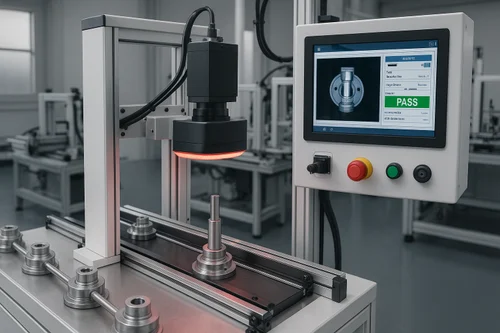
In manufacturing, for example, AI-powered vision systems can identify defects on production lines, helping maintain product quality and compliance. For a closer look at how artificial intelligence is improving quality control, see this overview of AI in quality control and inspection.
Challenges and Considerations in AI-Based Monitoring
While the benefits are significant, implementing AI for infrastructure assessment comes with its own set of challenges:
- Data quality and availability: AI models require large, high-quality datasets for training. In some cases, historical data may be scarce or inconsistent. Organizations can benefit from approaches like overcoming data scarcity in inspection to address this issue.
- Integration with legacy systems: Many infrastructure assets were not designed with digital monitoring in mind, making integration complex.
- Model retraining and adaptation: As conditions change, AI models must be updated to remain accurate. Continuous learning and retraining are essential.
- Cybersecurity: Increased connectivity can expose infrastructure to digital threats, requiring robust security protocols.
- Regulatory compliance: Meeting industry standards and government regulations is critical, especially in sectors like transportation and energy.
Best Practices for Deploying AI in Infrastructure Monitoring
To maximize the value of AI-driven monitoring, organizations should consider the following best practices:
- Start with a pilot project: Test AI solutions on a small scale before full deployment to validate performance and identify potential issues.
- Invest in data management: Ensure data is collected, labeled, and stored consistently for effective model training and analysis.
- Collaborate with domain experts: Combine AI expertise with field knowledge to interpret results accurately and set realistic goals.
- Plan for ongoing maintenance: Regularly retrain and update AI models as new data becomes available and conditions evolve.
- Prioritize transparency: Use explainable AI techniques so stakeholders can understand and trust automated decisions.
For teams working with limited data, small dataset training for ai inspection offers practical tips to build effective models even when historical records are limited.
Future Trends in Intelligent Infrastructure Assessment
The landscape of infrastructure monitoring is evolving rapidly. Emerging trends include:
- Edge computing: Processing data closer to the source (e.g., on sensors or cameras) for faster, real-time analysis.
- Autonomous inspection robots: Drones and ground vehicles equipped with AI for independent data collection and analysis.
- Integration with digital twins: Creating virtual replicas of physical assets for simulation, monitoring, and predictive maintenance.
- Advanced traceability: Linking inspection data across the supply chain, as seen in traceability in ai-driven manufacturing, to improve accountability and quality control.
As these technologies mature, they promise to make infrastructure management more proactive, efficient, and resilient.
Frequently Asked Questions
What types of infrastructure can benefit from AI-based health monitoring?
AI-driven monitoring is applicable to a wide range of assets, including bridges, tunnels, pipelines, power grids, manufacturing equipment, and water treatment facilities. Any infrastructure that requires regular inspection and maintenance can benefit from automated analysis and predictive insights.
How does AI detect problems that humans might miss?
Artificial intelligence can process large volumes of sensor data, images, and historical records much faster than humans. By identifying subtle patterns, changes, or anomalies, AI systems can flag potential issues—such as micro-cracks, corrosion, or unusual vibrations—before they become critical failures.
Is it difficult to implement AI for infrastructure health monitoring in existing systems?
Integration can be challenging, especially with older assets not designed for digital monitoring. However, many AI solutions are now designed to work with legacy equipment through add-on sensors, cameras, and cloud-based analytics. Starting with a pilot project and collaborating with both AI specialists and domain experts can ease the transition.