
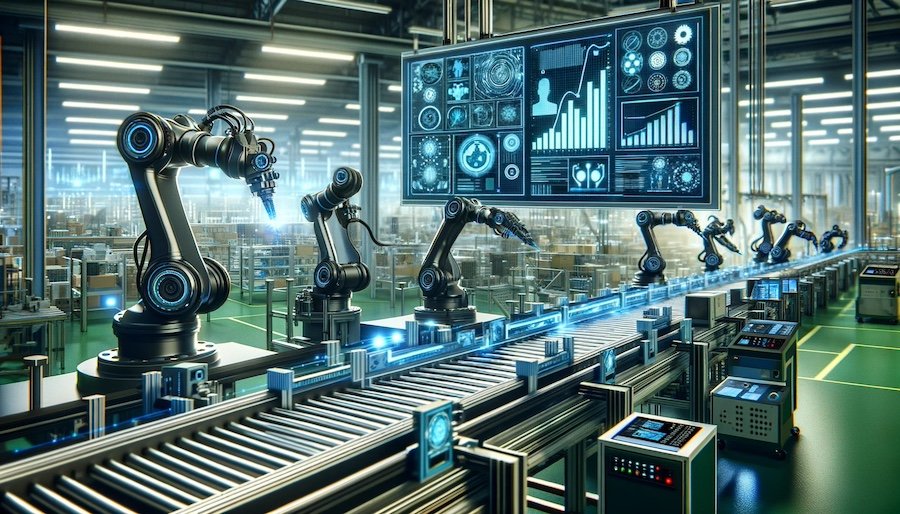
As artificial intelligence continues to transform quality assurance and visual inspection in manufacturing, maintaining the accuracy and reliability of AI models has become a top priority. Over time, even the most advanced inspection systems can experience performance drift due to changes in products, environments, or production processes. To address this, organizations must implement effective retraining strategies for AI inspection that ensure their models remain precise, adaptive, and robust.
This article explores practical approaches for keeping AI-driven inspection systems up to date, including when and how to retrain, the role of data management, and best practices for continuous improvement. For those interested in related applications, our guide on food safety monitoring with ai vision offers additional insights into the use of AI in critical inspection tasks.
Why Ongoing Model Maintenance Matters
AI inspection systems are only as effective as the data and algorithms that power them. Over time, several factors can cause a decline in model performance:
- Product design changes or new product variants
- Shifts in lighting, camera angles, or environmental conditions
- Wear and tear on equipment affecting image quality
- Introduction of new defect types or rare anomalies
- Gradual accumulation of mislabeled or ambiguous data
Without regular updates, these factors can lead to higher false reject rates, missed defects, and reduced trust in automated inspection. By adopting robust AI retraining strategies, manufacturers can ensure their systems adapt to evolving conditions and maintain high levels of accuracy.

Key Approaches to Retraining AI Inspection Models
There are several proven methods for keeping AI inspection models sharp. The right approach depends on the complexity of the inspection task, the volume of new data, and the criticality of the application.
Scheduled Retraining Intervals
One of the simplest strategies is to retrain models at regular intervals—weekly, monthly, or quarterly—using the latest labeled data. This approach works well in stable environments where changes are predictable. However, it may not be responsive enough for fast-changing production lines or when new defect types emerge suddenly.
Event-Driven Model Updates
In dynamic manufacturing settings, event-driven retraining is often more effective. Here, model updates are triggered by specific events, such as:
- Significant drops in inspection accuracy or increases in false positives/negatives
- Introduction of new product lines or major process changes
- Detection of previously unseen defect types
This approach ensures that the inspection system adapts quickly to real-world changes, minimizing downtime and quality risks.
Continuous Learning and Active Feedback Loops
Advanced retraining strategies for AI inspection often involve continuous learning, where the system automatically incorporates new labeled data as it becomes available. By leveraging active feedback from human inspectors or automated validation systems, AI models can be updated in near real-time. This minimizes the lag between encountering new scenarios and adapting to them.

Best Practices for Data Management and Labeling
Effective retraining depends on high-quality, well-labeled data. Here are some best practices to ensure your inspection models benefit from each retraining cycle:
- Curate diverse datasets: Include samples from all product variants, defect types, and environmental conditions.
- Implement robust labeling workflows: Use expert annotators and double-check ambiguous cases to minimize errors.
- Monitor data drift: Regularly analyze incoming data for shifts in distribution or new patterns that could impact model accuracy.
- Automate data collection: Integrate inspection systems with production databases and IoT devices for seamless data capture. For more on this, see our article on iot integration in inspection processes.
By prioritizing data quality and diversity, organizations can maximize the effectiveness of their retraining efforts and reduce the risk of model bias or blind spots.
Evaluating Model Performance After Retraining
After each retraining cycle, it’s critical to validate the updated model before full deployment. Key steps include:
- Testing on holdout datasets that reflect real-world production scenarios
- Comparing performance metrics (accuracy, precision, recall) to previous versions
- Conducting side-by-side trials with human inspectors for critical defect types
- Monitoring live results for unexpected changes in false reject or accept rates
This validation process helps ensure that retrained models deliver tangible improvements and do not introduce new errors.
Integrating Human Expertise with Automated Inspection
While AI can dramatically improve inspection speed and consistency, human expertise remains essential for handling edge cases and rare anomalies. Effective retraining strategies often include a feedback loop where human inspectors review uncertain cases, correct misclassifications, and provide valuable context for future model updates.
Combining automated inspection with human-in-the-loop validation not only improves model accuracy but also builds trust in AI systems among operators and quality managers.
Scaling and Automating Retraining Workflows
As inspection systems grow in scale and complexity, manual retraining becomes impractical. Organizations are increasingly turning to automated pipelines that handle data ingestion, labeling, model training, validation, and deployment. These pipelines can be integrated with manufacturing execution systems (MES) and cloud platforms for seamless operation.
For a deeper dive into how AI is transforming quality assurance, see this in-depth article on AI-driven quality assurance transformation.
Common Challenges and How to Overcome Them
Implementing effective retraining strategies for AI inspection is not without its hurdles. Some of the most common challenges include:
- Data scarcity: Rare defects may not appear frequently enough for robust model training. Synthetic data generation and augmentation can help address this gap.
- Labeling bottlenecks: Manual annotation is time-consuming. Semi-supervised learning and active learning can reduce the labeling burden.
- Model overfitting: Retraining on small or biased datasets can degrade performance. Always validate on diverse, real-world samples.
- Change management: Operators may be hesitant to trust updated models. Transparent validation and human-in-the-loop processes can ease adoption.
Addressing these challenges requires a combination of technical solutions, process improvements, and ongoing collaboration between data scientists, engineers, and quality teams.
FAQ: Retraining and Model Maintenance in AI Inspection
How often should AI inspection models be retrained?
The ideal retraining frequency depends on the pace of change in your production environment. In stable settings, quarterly updates may suffice. However, for lines with frequent product changes or new defect types, event-driven or continuous retraining is recommended.
What are the signs that an inspection model needs retraining?
Key indicators include a noticeable drop in detection accuracy, increases in false rejects or accepts, and the appearance of new or previously unseen defects. Regular performance monitoring is essential for early detection of these issues.
Can retraining be fully automated?
Many aspects of the retraining process—such as data collection, model training, and deployment—can be automated with modern MLOps tools. However, human oversight remains important for data labeling, validation, and handling edge cases.
How does retraining impact production downtime?
With well-designed pipelines, retraining can be performed in parallel with ongoing production, minimizing downtime. Validation and gradual rollout of updated models help ensure a smooth transition with minimal disruption.
What role do industrial cameras play in AI inspection retraining?
High-quality imaging hardware is crucial for capturing reliable data. For more on this topic, see our article on the role of industrial cameras in ai systems.
By following these best practices and leveraging the latest technologies, manufacturers can keep their AI inspection systems performing at their best—adapting to new challenges and delivering consistent quality over time.