

Developing robust AI inspection systems often hinges on the availability of large, high-quality datasets. However, in many real-world scenarios—especially in specialized manufacturing, quality control, or niche industrial applications—collecting vast amounts of labeled data is not always feasible. This is where small dataset training for AI inspection becomes both a challenge and an opportunity. By applying the right strategies, it’s possible to achieve reliable, accurate results even when data is limited.
This article explores practical methods to maximize efficiency and accuracy when building AI inspection models with constrained datasets. We’ll cover data augmentation, transfer learning, annotation best practices, and more, providing actionable insights for engineers, data scientists, and quality managers.
For those interested in how vision-based AI is transforming other sectors, our guide on food safety monitoring with ai vision demonstrates similar principles applied in food processing environments.
Why Small Dataset Training Matters in Industrial AI Inspection
In industrial and manufacturing settings, collecting thousands of defect images or rare anomaly samples is often impractical. Production lines may encounter new defect types infrequently, or labeling may require expert knowledge, making data collection slow and expensive. Yet, the need for reliable automated inspection remains high. This is why small dataset training for AI inspection is a critical area of focus for teams seeking to deploy AI solutions without the luxury of massive datasets.
The ability to train effective models on limited data can accelerate deployment, reduce costs, and enable rapid adaptation to new product lines or defect types. It also supports applications where privacy, proprietary designs, or regulatory constraints limit data sharing.
Key Strategies for Maximizing Performance with Limited Data
Achieving high accuracy with a small dataset requires a combination of technical approaches and process optimizations. Below are the most effective techniques used in the field.
Data Augmentation: Expanding Your Dataset Virtually
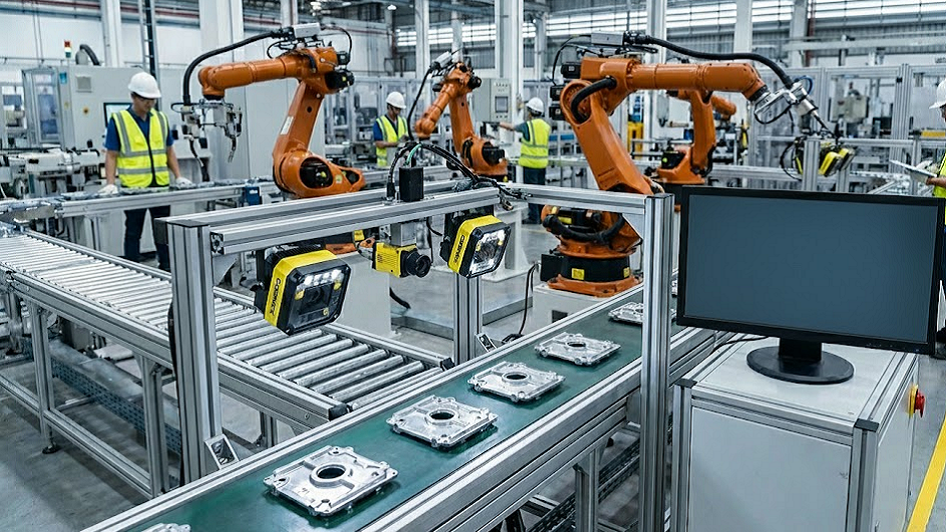
One of the most accessible ways to boost model robustness is through data augmentation. This technique involves generating new training samples by applying transformations to existing images, such as rotations, flips, scaling, cropping, and color adjustments. Augmentation helps the model generalize better by simulating real-world variations it may encounter during inspection.
- Geometric transformations: Rotate, flip, or crop images to simulate different orientations.
- Color and brightness adjustments: Vary lighting conditions to mimic real inspection environments.
- Noise injection: Add random noise to improve resilience to sensor imperfections.
These techniques can effectively multiply the size of your dataset, making models less likely to overfit and more capable of handling real-world variability.
Transfer Learning: Leveraging Pretrained Models
Transfer learning is a cornerstone of small dataset training for AI inspection. By starting with a model pretrained on a large, generic dataset (such as ImageNet), you can fine-tune it on your specific inspection task. This approach allows the model to retain general visual features while adapting to the nuances of your data.
Fine-tuning typically involves freezing the early layers of the neural network and retraining only the final layers with your limited dataset. This dramatically reduces the amount of data and training time required while maintaining high accuracy.
For example, in automotive manufacturing, transfer learning has enabled rapid deployment of inspection systems for new parts with only a handful of labeled images. For more on this, see our article on automotive quality control using ai.
Annotation Quality and Active Learning
When working with limited data, the quality of your labels becomes even more important. Inaccurate or inconsistent annotations can severely impact model performance. Invest in expert annotation and consider using active learning—a process where the model identifies uncertain samples and requests human review. This ensures that the most informative examples are labeled, maximizing the value of each annotation.
Tools that support iterative annotation and easy review cycles can further streamline the process, helping your team focus on the most impactful data points.
Model Selection and Regularization for Small Datasets
Not all AI models are equally suited for small dataset scenarios. Simpler architectures, such as shallow convolutional neural networks or even classical machine learning algorithms, may outperform deep networks when data is scarce. Regularization techniques—like dropout, weight decay, and early stopping—can also help prevent overfitting.
Experiment with different model types and hyperparameters, and use cross-validation to assess performance reliably.
Best Practices for Efficient AI Inspection Deployment
Beyond technical strategies, organizational and process best practices can further enhance the success of AI inspection projects with limited data.
Collaboration Between Domain Experts and Data Scientists
Close collaboration between manufacturing engineers, quality control specialists, and AI developers is essential. Domain experts can help identify the most relevant defect types, prioritize critical inspection criteria, and provide context for ambiguous cases. This ensures that the limited data collected is highly relevant and that the AI model addresses real operational needs.
Continuous Improvement and Feedback Loops
AI inspection systems should not be static. Establish feedback loops where inspection results are reviewed, and misclassifications or new defect types are added to the training set. This incremental approach allows the system to adapt over time, even as new challenges arise.
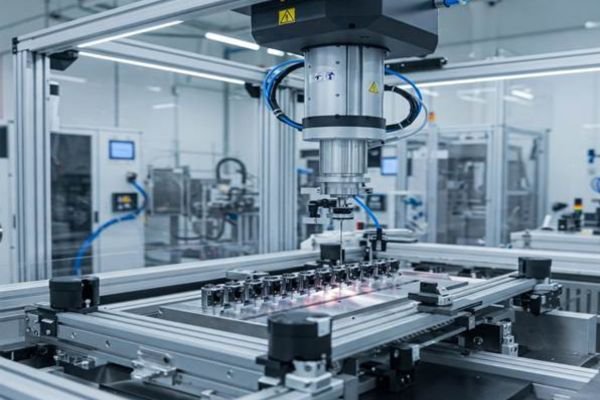
Integrating AI with IoT devices and industrial cameras can further streamline data collection and enable real-time monitoring. Our article on the role of industrial cameras in ai systems explores how hardware choices impact inspection accuracy and efficiency.
Understanding the Value of AI in Quality Control
Even with limited data, AI can deliver significant value in quality control by reducing manual inspection workloads, increasing consistency, and catching subtle defects that might be missed by human inspectors. For a broader perspective, see these key benefits of AI in quality control and how they apply to various industries.
FAQ: Small Dataset Approaches for AI Inspection
What is the minimum dataset size needed for AI inspection?
There is no universal minimum, as it depends on the complexity of the inspection task and the variability of the items being inspected. However, with data augmentation and transfer learning, effective models can sometimes be trained with as few as 50–200 labeled images per class. The key is to ensure that the dataset captures the range of real-world variations and defect types relevant to your application.
How can I improve model accuracy when data is limited?
Focus on high-quality annotations, use data augmentation, and leverage transfer learning from pretrained models. Regularly review model predictions and add misclassified or uncertain samples to your training set. Collaborate with domain experts to ensure that the most critical scenarios are well represented in your data.
Are there risks to using small datasets for AI inspection?
Yes, small datasets increase the risk of overfitting, where the model performs well on training data but poorly on new samples. To mitigate this, use regularization techniques, cross-validation, and continuous feedback loops. Always validate your model on independent data before deploying it in production.