
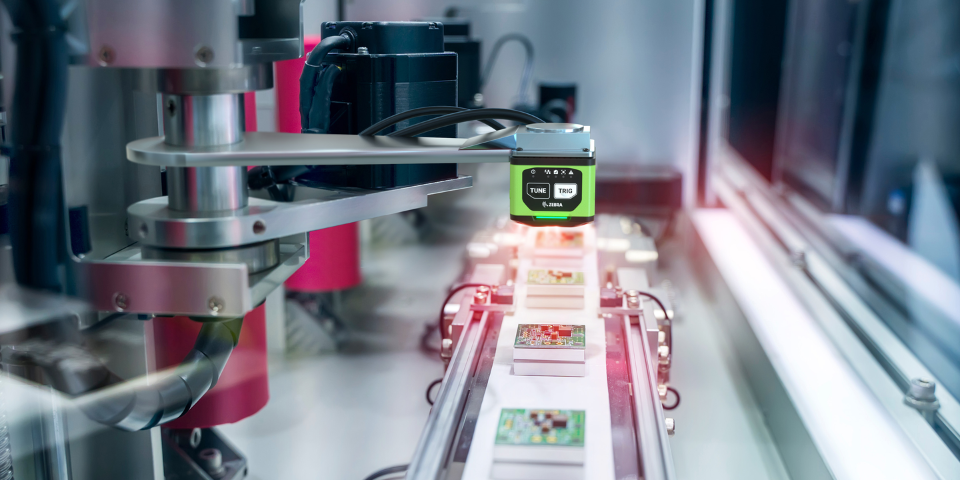
Transfer learning for industrial applications is rapidly transforming how manufacturers, logistics providers, and quality control teams deploy artificial intelligence. Instead of building AI models from scratch, organizations can leverage pretrained models and adapt them to specific industrial tasks. This approach dramatically reduces development time, lowers data requirements, and accelerates the path to production-ready solutions.
In this guide, we’ll explore how transfer learning is being used across various industrial sectors, why it offers a significant speed advantage, and what best practices can help teams maximize its value. We’ll also highlight real-world examples, discuss challenges, and provide resources for further exploration. For teams interested in keeping AI models sharp over time, see our article on retraining strategies for AI inspection.
Understanding Transfer Learning in Industrial Contexts
Transfer learning is a machine learning technique where a model developed for one task is reused as the starting point for a model on a second, related task. In industrial environments, this often means taking a neural network trained on large, generic datasets (such as images of everyday objects) and fine-tuning it for specific use cases like defect detection, part classification, or predictive maintenance.
The main advantage is speed. By building on existing knowledge, teams can deploy AI solutions much faster than if they had to collect massive amounts of new data and train models from scratch. This is particularly valuable in sectors where labeled data is scarce or expensive to obtain.
Key Benefits of Transfer Learning for Industrial Applications
Adopting transfer learning in industrial settings offers several compelling advantages:
- Reduced Data Requirements: Pretrained models require fewer labeled examples for fine-tuning, making them ideal for industries where data is limited.
- Faster Deployment: Projects move from concept to production in weeks rather than months, accelerating innovation cycles.
- Improved Performance: Leveraging knowledge from large-scale datasets often leads to better accuracy, especially for tasks with subtle visual differences.
- Cost Efficiency: Less time spent on data collection and training translates to lower development costs.
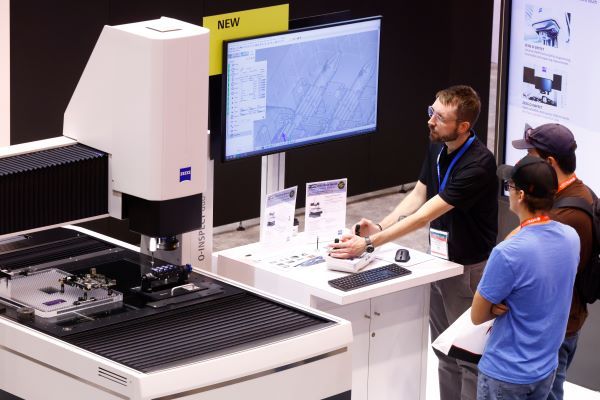
Real-World Use Cases Accelerated by Transfer Learning
Manufacturers and logistics companies are already seeing the impact of transfer learning in several areas:
- Visual Inspection: Pretrained vision models are fine-tuned to detect defects in automotive parts, electronics, or packaging, even with small datasets. For more on handling limited data, see our guide to small dataset training for AI inspection.
- Predictive Maintenance: Models trained on generic equipment data can be adapted to predict failures in specific machines, reducing downtime and maintenance costs.
- Supply Chain Optimization: Transfer learning enables rapid adaptation of forecasting models to new products or changing demand patterns.
- Quality Control: AI-powered quality management systems use transfer learning to quickly adapt to new product lines or inspection criteria. For a deeper dive, see this analysis of AI quality control in manufacturing.
How Transfer Learning Works in Industrial AI
The typical workflow for applying transfer learning in industrial settings involves several steps:
- Select a Pretrained Model: Choose a model trained on a large, relevant dataset (such as ImageNet for vision tasks).
- Adapt the Model: Replace or fine-tune the final layers to match the specific industrial task, such as classifying defects or predicting equipment status.
- Fine-Tune with Local Data: Train the adapted model on a smaller, task-specific dataset collected from the target environment.
- Validate and Deploy: Test the model’s performance and deploy it to production, monitoring results and retraining as needed.
This approach is especially effective when combined with strategies for overcoming data scarcity in inspection and leveraging new architectures like vision transformers for industrial use.
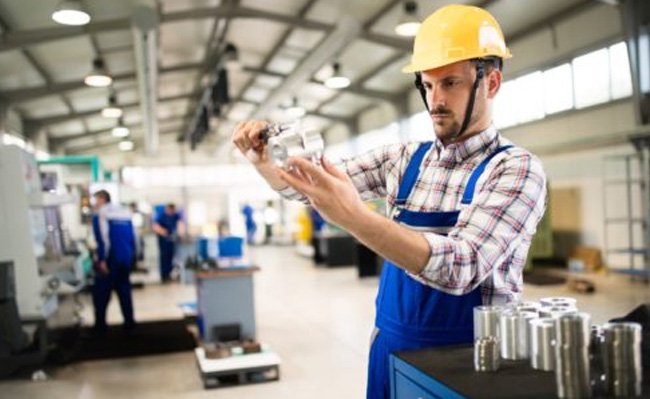
Challenges and Considerations for Industrial Teams
While transfer learning offers clear advantages, there are important factors to consider:
- Domain Shift: Models pretrained on generic data may not capture unique characteristics of industrial environments, requiring careful validation.
- Data Quality: Even with fewer samples, the quality and representativeness of local data are critical for success.
- Traceability: Maintaining traceability in AI-driven manufacturing is essential for regulatory compliance and troubleshooting. For more, see our article on traceability in ai-driven manufacturing.
- Continuous Improvement: Industrial processes change over time, so ongoing model retraining and monitoring are necessary to maintain accuracy.
Best Practices for Fast and Effective Implementation
To maximize the benefits of transfer learning in industrial projects, consider these best practices:
- Start with Relevant Models: Whenever possible, select pretrained models that are closely related to your target task or industry.
- Use High-Quality Local Data: Even small datasets can be powerful if they are accurately labeled and representative of real-world conditions.
- Monitor Performance Continuously: Set up regular evaluations to catch performance drift and trigger retraining as needed.
- Document Model Changes: Keep detailed records of model versions, training data, and deployment environments for traceability and compliance.
Frequently Asked Questions
What types of industrial problems benefit most from transfer learning?
Transfer learning is especially effective for tasks where labeled data is scarce, such as visual inspection, anomaly detection, and predictive maintenance. It’s also valuable for rapidly adapting AI systems to new product lines or changing manufacturing processes.
How much local data is needed to fine-tune a pretrained model?
The amount varies by task, but transfer learning can often deliver strong results with just a few hundred labeled examples. The key is ensuring the data is high-quality and representative of the actual production environment.
Are there risks in using transfer learning for industrial AI?
Yes, there are risks such as domain mismatch, overfitting to small datasets, and lack of traceability. These can be mitigated by careful validation, continuous monitoring, and following best practices for data management and documentation.
Conclusion
Transfer learning for industrial applications is enabling faster, more efficient deployment of AI across manufacturing, logistics, and quality control. By building on existing models and adapting them to specific tasks, organizations can overcome data limitations, reduce costs, and stay competitive in a rapidly evolving landscape. As industrial AI matures, transfer learning will remain a cornerstone technology for agile, scalable, and high-performance solutions.