
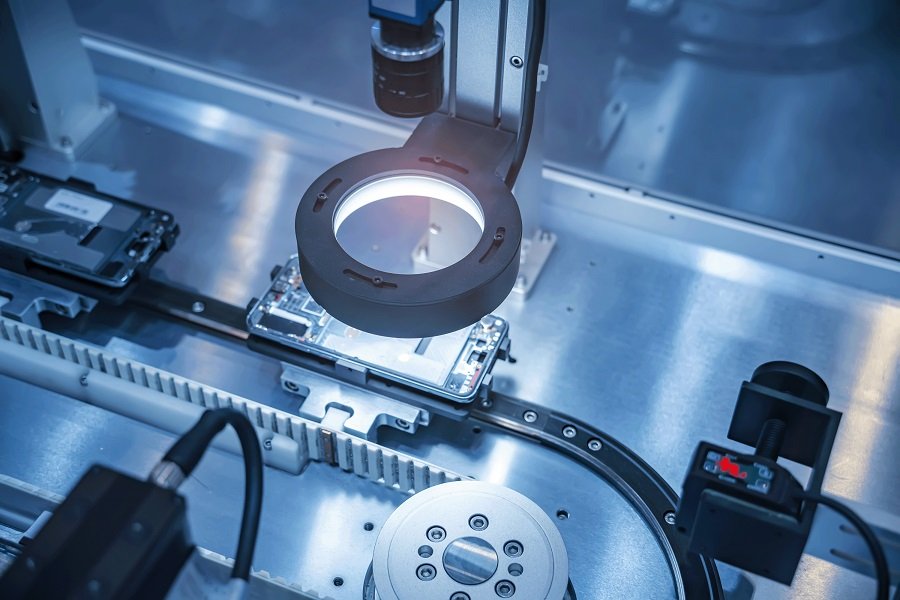
Smart sensors for real-time quality data are transforming how manufacturers and industrial operations monitor, analyze, and improve their processes. These advanced devices capture critical quality metrics instantly, enabling faster decision-making and reducing the risk of defects. As industries strive for higher efficiency and product consistency, integrating intelligent sensing technology has become essential for maintaining competitive advantage.
The ability to collect, process, and act on quality data in real time is not just a technological upgrade—it’s a strategic shift. By leveraging connected sensors, companies can detect anomalies, ensure compliance, and optimize production lines without waiting for manual inspections or delayed reports. This guide explores how these technologies work, their benefits, and how organizations can implement them for measurable improvements.
For organizations interested in advanced approaches to data-driven inspection, exploring retraining strategies for AI inspection can further enhance the effectiveness of smart sensor deployments.
How Intelligent Sensors Enable Instant Quality Monitoring
Modern manufacturing environments demand rapid feedback to maintain high standards. Smart sensors for real-time quality data achieve this by integrating sensing, processing, and communication capabilities directly on the production floor. Unlike traditional sensors that only capture raw signals, these devices can analyze data locally and transmit actionable information to central systems or cloud platforms.
Key features include:
- Embedded microprocessors for on-device analytics
- Wireless connectivity (e.g., Wi-Fi, Bluetooth, industrial protocols)
- Support for multiple measurement types: temperature, vibration, force, visual inspection, and more
- Seamless integration with manufacturing execution systems (MES) and enterprise resource planning (ERP) tools
This instant feedback loop allows operators to spot deviations and intervene before minor issues escalate into costly defects or downtime.

Benefits of Real-Time Data Collection in Quality Control
Deploying smart sensors for real-time quality data offers several tangible advantages:
- Immediate detection of process anomalies: Issues such as misalignments, temperature fluctuations, or material inconsistencies are flagged as soon as they occur.
- Reduced scrap and rework: Early intervention minimizes waste and the need for costly corrections.
- Enhanced traceability: Each product or batch can be tracked with a digital record of its quality metrics, supporting compliance and customer assurance.
- Continuous improvement: Data-driven insights help teams identify trends, optimize parameters, and refine processes over time.
- Labor efficiency: Automated monitoring frees up skilled personnel for higher-value tasks, reducing manual inspection burdens.
For a deeper look at how traceability is evolving in AI-driven manufacturing, see the discussion on traceability in AI-driven manufacturing.
Key Applications Across Industries
The adoption of real-time quality monitoring is expanding across a range of sectors:
- Automotive: Monitoring assembly lines for torque, alignment, and visual defects.
- Pharmaceuticals: Ensuring dosage accuracy, packaging integrity, and environmental controls.
- Food and beverage: Verifying temperature, hygiene, and fill levels to meet safety standards.
- Electronics: Detecting soldering issues, component placement, and functional testing.
- Packaging: Checking seal quality, label placement, and product counts.
In each case, the ability to capture and act on quality data in real time leads to higher yields, fewer recalls, and stronger brand reputation.
Integrating Smart Sensors with AI and Data Fusion
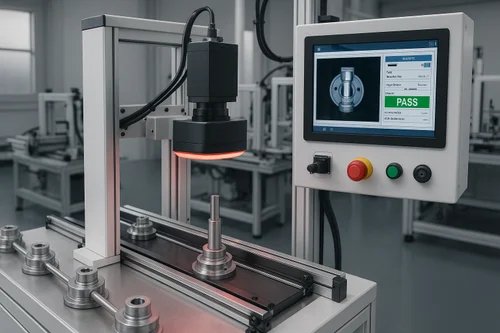
The next evolution in quality assurance involves combining sensor data with artificial intelligence and multimodal analytics. By aggregating inputs from multiple sensor types—such as vision, force, and temperature—manufacturers can achieve a holistic view of product quality.
AI algorithms can detect subtle patterns and predict failures that might elude human inspectors. For example, a combination of camera-based inspection and vibration analysis can identify early signs of equipment wear or misalignment. To learn how advanced data fusion techniques are shaping inspection, see the overview on multimodal data fusion for inspection.
Additionally, keeping AI models accurate over time requires ongoing data collection and retraining. This ensures that the system adapts to new products, materials, or process changes—further increasing reliability.
Challenges and Considerations for Implementation
While the benefits are clear, deploying smart sensors for real-time quality data requires careful planning:
- Data integration: Ensuring compatibility with existing IT infrastructure and software platforms.
- Cybersecurity: Protecting sensitive production data from unauthorized access or tampering.
- Scalability: Selecting solutions that can grow with production needs and accommodate new sensor types.
- Training: Upskilling staff to interpret sensor outputs and leverage analytics tools effectively.
- Cost: Balancing upfront investment with expected ROI from reduced defects and improved efficiency.
Organizations should also consider the challenges of data scarcity, especially when training AI models for inspection. For practical strategies, see guidance on overcoming data scarcity in inspection.
Future Trends in Quality Data Collection
The landscape of industrial quality control is evolving rapidly. Emerging trends include:
- Edge computing: More processing is happening directly on the sensor or nearby gateways, reducing latency and bandwidth needs.
- Vision transformers: New AI architectures are improving the accuracy of visual inspections, even in complex environments. For a technical deep dive, explore vision transformers for industrial use.
- Cloud integration: Centralized data storage and analytics enable benchmarking across multiple sites and continuous improvement initiatives.
- Self-calibrating sensors: Devices that automatically adjust to environmental changes, ensuring consistent accuracy.
As these technologies mature, the role of human inspectors will shift further toward oversight, exception handling, and process optimization.
For additional perspectives on how artificial intelligence is enhancing inspection and quality control, see this overview of the benefits of using AI in quality control and inspection.
FAQ
What types of quality data can smart sensors collect in real time?
Smart sensors can capture a wide range of data points, including temperature, humidity, vibration, pressure, force, visual images, and even chemical composition. The specific metrics depend on the sensor type and application, but all are designed to provide immediate feedback for quality assurance.
How do these sensors improve manufacturing efficiency?
By providing instant alerts when a process deviates from set parameters, smart sensors help operators correct issues before they result in defects or downtime. This reduces waste, minimizes rework, and keeps production lines running smoothly.
Are there challenges to integrating real-time quality monitoring systems?
Yes, challenges include ensuring compatibility with existing systems, managing large volumes of data, maintaining cybersecurity, and training staff to use new tools. However, careful planning and choosing scalable, secure solutions can help organizations overcome these hurdles.
Conclusion
The adoption of smart sensors for real-time quality data is reshaping industrial quality assurance. By enabling instant, data-driven decisions, these technologies help organizations reduce defects, improve traceability, and drive continuous improvement. As AI and data integration capabilities expand, the potential for even greater efficiency and accuracy will continue to grow—making real-time quality monitoring a cornerstone of modern manufacturing.