
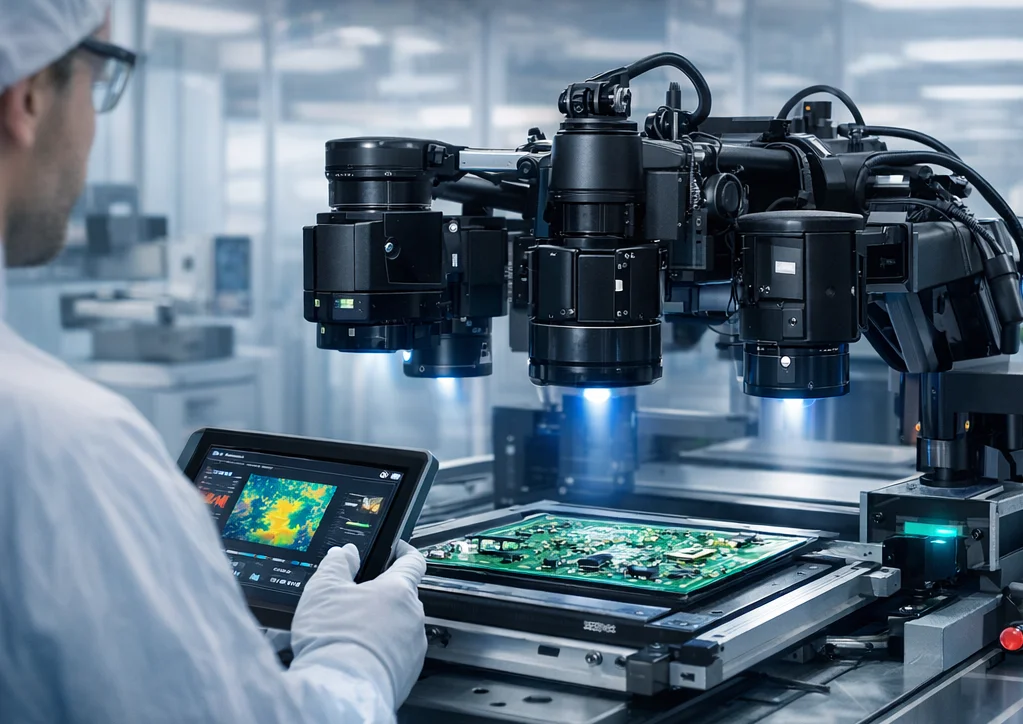
As artificial intelligence continues to transform manufacturing and industrial automation, the role of industrial cameras in AI systems has become increasingly significant. These advanced imaging devices serve as the eyes of automated inspection, quality control, and process optimization solutions. By capturing high-resolution, reliable visual data, they enable AI algorithms to analyze, interpret, and act on information in real time. This article explores how industrial cameras underpin the effectiveness of AI-driven vision systems, their key features, and the impact they have across various industries.
For those interested in reducing errors in automated inspection, you may also find value in our guide on how to reduce false rejects with AI, which discusses practical strategies for improving accuracy in vision-based quality control.
Understanding How Industrial Cameras Power AI Vision
At the heart of any AI-powered vision system is the ability to acquire clear, consistent images of the target environment. Industrial cameras are engineered for this exact purpose. Unlike consumer-grade cameras, these devices are built to withstand harsh factory conditions, deliver precise imaging, and integrate seamlessly with automation hardware and software.
The role of industrial cameras in ai systems extends beyond simple image capture. They provide the data foundation for machine learning models to detect defects, classify products, and monitor processes. High frame rates, low latency, and robust connectivity options ensure that AI algorithms receive the information they need to make split-second decisions on production lines.

Key Features That Enable AI-Driven Inspection
For AI vision systems to function effectively, the imaging hardware must meet strict requirements. Here are some of the most important features that set industrial cameras apart:
- High Resolution: Detailed images are crucial for AI models to identify subtle defects or variations in products.
- Fast Frame Rates: In high-speed manufacturing, cameras must capture images rapidly to keep up with moving parts and conveyors.
- Low Noise Sensors: Clean, low-noise images improve the accuracy of AI analysis, especially in low-light or challenging environments.
- Robust Construction: Industrial cameras are designed to operate reliably in dusty, humid, or high-temperature settings.
- Flexible Connectivity: Support for GigE, USB3, and other industrial protocols ensures seamless integration with AI processing units and PLCs.
These capabilities make industrial cameras the preferred choice for tasks where reliability and precision are non-negotiable.
Applications Across Modern Manufacturing
The adoption of AI vision solutions is rapidly expanding across sectors such as automotive, electronics, food and beverage, and pharmaceuticals. In each of these industries, the role of industrial cameras in ai systems is central to achieving higher quality standards and operational efficiency.
- Automotive: Cameras enable AI to inspect welds, paint finishes, and assembly accuracy, reducing recalls and warranty claims.
- Electronics: High-resolution imaging detects micro-defects in circuit boards and components, supporting zero-defect manufacturing goals.
- Food and Beverage: Vision systems ensure packaging integrity, label accuracy, and contamination detection, all driven by robust imaging hardware.
- Pharmaceuticals: Cameras verify fill levels, tablet shapes, and packaging, helping maintain compliance and safety.

As more factories adopt smart manufacturing practices, the synergy between industrial cameras and AI is becoming a key driver of productivity and competitiveness. For a broader perspective on industry trends, see our analysis of smart factory quality control trends.
Integration with AI Algorithms and Edge Computing
The effectiveness of AI vision systems depends not only on the quality of the camera hardware but also on how well these devices interface with AI models and edge computing platforms. Modern industrial cameras often feature onboard processing, allowing some image pre-processing or compression before data is sent to AI engines.
Edge AI solutions, which process data locally rather than in the cloud, rely heavily on fast, reliable image acquisition. This reduces latency and ensures that critical inspection decisions can be made in real time, even in environments with limited connectivity. The close integration between cameras and AI processors is essential for applications like anomaly detection, predictive maintenance, and adaptive process control.
For more on the interplay between predictive and reactive strategies in industrial environments, our comparison of predictive maintenance vs reactive inspection offers in-depth insights.
Benefits for Quality Control and Process Optimization
Leveraging industrial cameras in AI vision systems delivers several tangible benefits:
- Increased Accuracy: High-quality imaging reduces false positives and negatives in defect detection.
- Scalability: Automated vision allows manufacturers to inspect more products at higher speeds without sacrificing quality.
- Cost Reduction: Early detection of defects minimizes waste, rework, and costly recalls.
- Continuous Improvement: Data collected by cameras can be used to refine AI models and optimize production processes over time.
For a detailed look at how AI and vision technology are transforming quality control, this overview of AI benefits for manufacturing quality control provides valuable context.
Challenges and Considerations in Deploying Industrial Cameras
While the advantages are clear, deploying industrial cameras for AI vision does come with challenges. Selecting the right camera for the application is crucial—factors such as resolution, lens compatibility, lighting, and environmental resilience must all be considered. Additionally, ensuring that the imaging pipeline is optimized for the specific needs of the AI algorithms is essential for achieving reliable results.
Integration with existing automation infrastructure, data security, and ongoing maintenance are also important factors. For those looking to incorporate IoT into their inspection processes, our article on IoT integration in inspection processes covers key considerations for smart factories.
Future Outlook: Evolving Capabilities and Industry Impact
The future of AI vision in industry will see continued advancements in camera technology, including higher resolutions, faster processing, and smarter onboard features. As AI models become more sophisticated, the demand for precise, real-time visual data will only increase. This will drive further innovation in both camera hardware and the software that powers automated inspection and process control.
Manufacturers who invest in robust imaging solutions today will be well-positioned to capitalize on the next wave of industrial automation, achieving greater efficiency, quality, and adaptability in their operations.
Frequently Asked Questions
What makes industrial cameras different from regular cameras?
Industrial cameras are designed for demanding environments, offering higher durability, precise imaging, and flexible connectivity. They are built to deliver consistent performance in conditions where consumer cameras would fail, such as extreme temperatures, vibration, or exposure to dust and moisture.
How do industrial cameras support AI-based quality control?
By providing high-resolution, low-noise images, industrial cameras supply the data needed for AI algorithms to accurately detect defects, classify products, and monitor production lines. Their reliability and speed are essential for real-time inspection and automated decision-making.
Can industrial cameras be integrated with existing production systems?
Yes, most industrial cameras support standard industrial interfaces and protocols, making them compatible with a wide range of automation equipment and software. Proper integration ensures seamless data flow between the cameras, AI processors, and control systems.
What industries benefit most from AI vision systems using industrial cameras?
Sectors such as automotive, electronics, food and beverage, and pharmaceuticals see the greatest benefits, as they require high-speed, high-accuracy inspection and process monitoring to maintain quality and compliance.
Where can I learn more about anomaly detection in manufacturing?
For a deeper dive into this topic, see our resource on what is anomaly detection in manufacturing, which explains how AI and vision systems identify irregularities in production.