

As industries increasingly adopt cloud-based AI inspection systems, understanding the bandwidth needs for cloud ai inspection becomes essential for reliable, real-time performance. These systems often process high-resolution images or video streams, sending large volumes of data from edge devices to cloud servers for analysis. Without adequate network infrastructure, organizations risk bottlenecks, latency, and even failed inspections, which can impact quality control and operational efficiency.
Whether you’re deploying AI-powered visual inspection in manufacturing, healthcare, or logistics, the network is a critical component. This article explores the factors influencing bandwidth requirements, how to estimate your needs, and practical strategies for optimizing connectivity. For those interested in keeping their AI models sharp and up-to-date, our guide on retraining strategies for ai inspection offers valuable insights into maintaining inspection accuracy over time.
Understanding Data Flow in Cloud-Based AI Inspection
Cloud AI inspection systems typically involve capturing images or video at the edge—such as on a production line or in a warehouse—and transmitting this data to the cloud for processing. The cloud then runs complex machine learning models to detect defects, classify products, or verify compliance. The results are sent back to local systems or operators for action.
This workflow means that your network must reliably handle:
- Continuous streams of high-resolution images or video
- Occasional bursts of data during peak inspection times
- Low-latency requirements for real-time feedback
- Secure, lossless transmission to preserve inspection accuracy
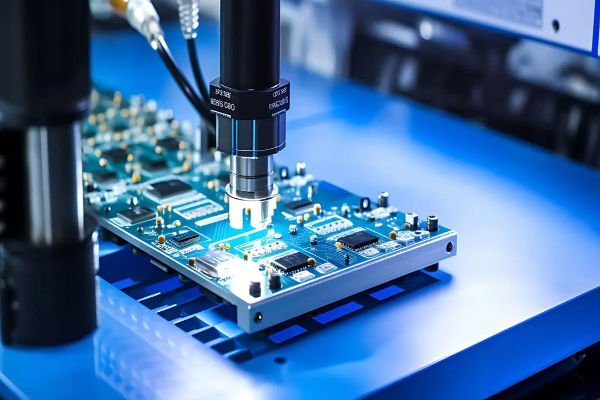
Key Factors Affecting Bandwidth Requirements
Several variables influence the bandwidth needs for cloud ai inspection:
- Image or Video Resolution: Higher resolutions (e.g., 4K video or 20MP images) generate more data per frame, increasing bandwidth demands.
- Frame Rate: The number of images or frames sent per second directly impacts the data rate. Real-time inspection may require 15–60 frames per second.
- Compression: Using efficient codecs (like H.264 or JPEG2000) can significantly reduce bandwidth without sacrificing inspection quality.
- Inspection Frequency: Continuous inspection requires more sustained bandwidth than periodic or batch processing.
- Number of Inspection Points: Multiple cameras or inspection stations multiply the total data transmitted.
- Cloud Processing Latency: Some applications can tolerate a few seconds of delay, while others demand near-instant feedback, impacting how much data must be sent and how quickly.
Estimating Bandwidth Needs for AI Inspection Workflows
To calculate your network requirements, consider the following formula:
Bandwidth (Mbps) = (Image Size in MB) × (Frames per Second) × (Number of Cameras) × 8
For example, a single 5MB image sent at 10 frames per second from one camera would require:
- 5 MB × 10 fps × 1 camera × 8 = 400 Mbps
With compression, the image size may drop to 1MB, reducing the bandwidth to 80 Mbps. Multiply this by the number of inspection points to get your total requirement. Always add a safety margin (typically 20–30%) to accommodate network fluctuations and peak loads.
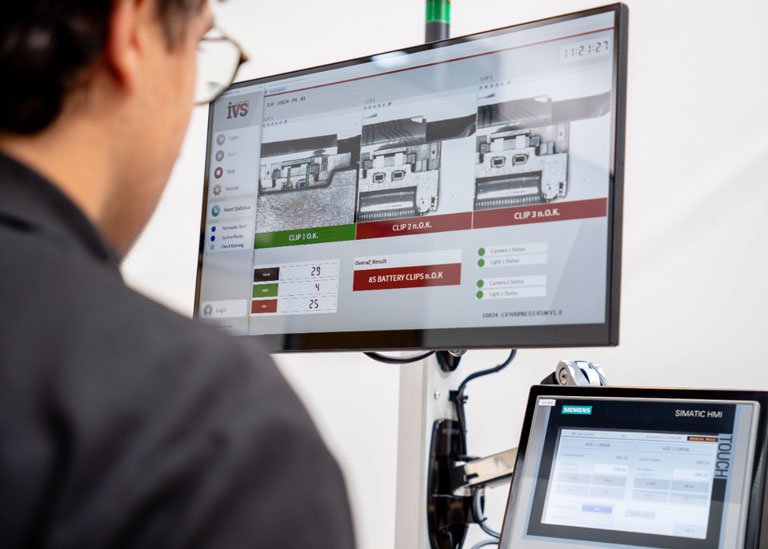
Optimizing Network Infrastructure for Inspection Systems
Meeting the network requirements for cloud-based AI inspection often involves more than just increasing raw bandwidth. Consider these best practices:
- Edge Preprocessing: Use local compute resources to filter, crop, or compress images before transmission, reducing data volume.
- Prioritize Critical Traffic: Implement Quality of Service (QoS) policies to ensure inspection data is prioritized over less critical network traffic.
- Leverage Dedicated Connections: For mission-critical applications, consider dedicated fiber or private WAN links to the cloud.
- Monitor and Scale: Use network monitoring tools to track usage and scale bandwidth as inspection workloads grow.
- Redundancy and Failover: Design for high availability with redundant network paths to avoid downtime during maintenance or outages.
For organizations looking to push the boundaries of AI in inspection, exploring vision transformers for industrial use can offer new possibilities in accuracy and efficiency, but may also impact data and network requirements.
Security and Compliance Considerations
Transmitting sensitive inspection data, especially in regulated industries like pharmaceuticals or automotive, requires robust security measures. Ensure all data transfers are encrypted in transit, and consider compliance requirements for data residency and privacy. Secure VPNs or dedicated lines can help protect intellectual property and sensitive production data.
For a deeper dive into risk mitigation, see our article on risk management in ai inspection, which covers implementation strategies for secure and compliant AI deployments.
Industry Examples and Real-World Benchmarks
Bandwidth requirements can vary significantly by industry and application:
- Semiconductor Manufacturing: High-speed lines may use dozens of cameras, each sending gigabytes of data per hour. Efficient compression and edge filtering are essential.
- Medical Device Inspection: Regulatory requirements often demand lossless image quality, increasing bandwidth needs but ensuring traceability and accuracy.
- Automotive Assembly: Real-time feedback is critical, so low-latency, high-bandwidth connections are prioritized.
For more technical details and case studies, the NEC technical report on AI-based visual inspection in manufacturing provides a comprehensive overview of network and system design considerations.
Future Trends: Scaling for Next-Generation AI Inspection
As AI models grow more sophisticated and edge devices become smarter, the balance between local and cloud processing will continue to evolve. Emerging trends include:
- Federated Learning: Training models locally and sharing only model updates, reducing raw data transfer needs.
- Generative AI for Data Augmentation: Creating synthetic inspection data locally to supplement cloud-based training, as discussed in our guide on generative ai for inspection training.
- 5G and Edge Networks: Ultra-low latency and high throughput connections will enable more real-time, distributed inspection workflows.
Staying ahead of these trends will help organizations future-proof their network infrastructure and maximize the value of AI-driven inspection.
FAQ: Bandwidth and Cloud AI Inspection
What is the minimum recommended bandwidth for cloud-based AI inspection?
The minimum bandwidth depends on image size, frame rate, and the number of cameras. For a single 2MP camera sending compressed images at 10 fps, a connection of at least 20–50 Mbps is typically required. For multiple cameras or higher resolutions, requirements can quickly reach several hundred Mbps or more.
How can I reduce bandwidth usage without sacrificing inspection accuracy?
Use edge preprocessing to filter or compress images before sending them to the cloud. Select efficient codecs, lower frame rates where possible, and transmit only regions of interest. Always validate that compression does not impact defect detection performance.
Are there alternatives to sending all inspection data to the cloud?
Yes. Hybrid architectures allow for some processing at the edge, sending only metadata or flagged images to the cloud. Federated learning and on-device AI are also gaining traction, reducing the need for constant high-bandwidth connections while maintaining inspection quality.