

As manufacturing scales up to meet global demand, the need for reliable, efficient, and accurate quality control becomes more critical than ever. Traditional inspection methods, while effective in certain settings, often struggle to keep pace with the speed and complexity of modern production lines. This is where high-speed AI inspection systems are making a transformative impact. By leveraging advanced machine learning and computer vision, these solutions enable manufacturers to maintain stringent quality standards while increasing throughput and reducing operational costs.
In this article, we’ll explore how automated visual inspection powered by artificial intelligence is reshaping industrial processes. We’ll also discuss practical considerations, industry examples, and the strategic advantages of adopting these technologies for large-scale manufacturing environments. For those interested in optimizing AI model performance over time, our guide on retraining strategies for AI inspection offers additional insights.
How Automated Inspection Accelerates Mass Production
The integration of high-speed AI inspection technologies into mass production lines marks a significant leap forward for manufacturers. Unlike manual or conventional machine vision systems, AI-driven solutions can process vast amounts of visual data in real time, identifying defects, inconsistencies, or anomalies with remarkable precision. This capability is especially valuable in industries where even minor errors can lead to costly recalls or safety risks.
By automating the inspection process, manufacturers can achieve:
- Consistent Quality Control: AI systems apply the same standards to every product, eliminating human subjectivity and fatigue.
- Faster Throughput: Inspections occur at production-line speeds, supporting high-volume output without bottlenecks.
- Scalability: AI inspection systems can be deployed across multiple lines or facilities, adapting to changing production needs.
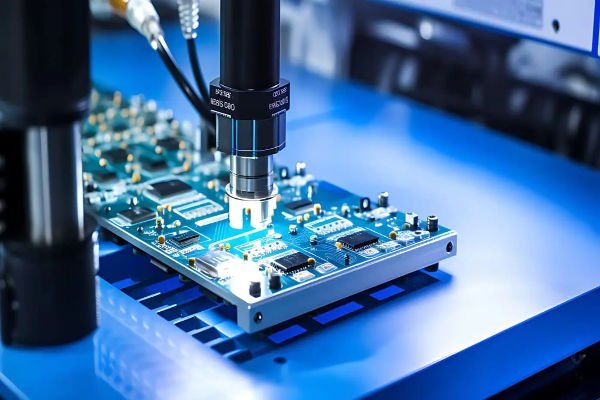
Key Advantages of Rapid AI-Based Quality Control
The shift to AI-powered inspection brings several tangible benefits to mass production environments. Here are some of the most impactful:
Enhanced Detection Accuracy
AI models are trained on large datasets of images, enabling them to recognize subtle defects that might escape human inspectors or rule-based vision systems. This leads to higher product quality and fewer defective items reaching customers.
Real-Time Feedback and Process Optimization
With instant analysis, manufacturers receive immediate feedback on production quality. This allows for rapid adjustments to processes, minimizing waste and reducing the risk of large-scale defects. For example, if a pattern of errors is detected, operators can intervene before a significant batch is affected.
Reduced Labor Costs and Improved Safety
Automated inspection reduces the need for manual labor in repetitive, high-speed environments. This not only lowers operational costs but also improves workplace safety by minimizing human exposure to hazardous or monotonous tasks.
Traceability and Data-Driven Insights
Every inspection event can be logged and analyzed, supporting traceability and compliance with industry standards. Manufacturers can use this data to identify trends, optimize processes, and demonstrate quality assurance to customers and regulators. For a deeper look at tracking materials and products throughout the manufacturing process, see our article on traceability in AI-driven manufacturing.
Applications in Different Industries
The adoption of high-speed AI inspection is growing across a range of sectors. Some notable examples include:
- Electronics: Detecting micro-cracks, soldering defects, and component misalignments on printed circuit boards.
- Automotive: Inspecting welds, paint finishes, and assembly accuracy at high speeds.
- Pharmaceuticals: Verifying packaging integrity, label accuracy, and product consistency to meet strict regulatory standards.
- Food and Beverage: Checking for foreign objects, packaging defects, and labeling errors.
- Medical Devices: Ensuring the highest quality and safety standards for critical healthcare products.

Challenges and Considerations for Implementation
While the advantages are clear, deploying AI inspection at scale does come with challenges. Manufacturers must consider:
- Data Quality: High-quality, representative image data is essential for training robust AI models. Addressing issues like overcoming data scarcity in inspection is critical for success.
- Model Maintenance: As production lines evolve, AI models may require periodic retraining to maintain accuracy. For tips on keeping models up to date, see our guide on small dataset training for AI inspection.
- Integration: Seamless integration with existing manufacturing execution systems (MES) and automation platforms is key for maximizing ROI.
- Initial Investment: While long-term savings are significant, upfront costs for hardware, software, and integration should be factored into planning.
Future Trends in AI-Driven Quality Assurance
The landscape of automated inspection continues to evolve rapidly. Innovations such as vision transformers for industrial use are enabling even greater accuracy and adaptability. These next-generation models can handle complex visual tasks and adapt to new product types with minimal retraining.
Additionally, advances in edge computing allow AI inspection systems to operate directly on the production line, reducing latency and enabling real-time decision-making. As these technologies mature, manufacturers can expect even greater efficiency, flexibility, and quality assurance.
For a technical overview of how AI-based visual inspection is being applied in real-world manufacturing, the NEC technical report on AI visual inspection provides valuable context and examples.
FAQ: High-Speed AI Inspection in Manufacturing
What types of defects can AI inspection systems detect?
AI-powered inspection solutions are capable of identifying a wide variety of defects, including surface scratches, dimensional inaccuracies, assembly errors, missing components, and cosmetic flaws. The specific types of defects detected depend on the training data and the application requirements.
How does AI inspection compare to traditional machine vision?
While traditional machine vision relies on predefined rules and templates, AI-based systems use deep learning to recognize complex patterns and subtle anomalies. This allows for greater flexibility and accuracy, especially in environments with high product variability or challenging visual conditions.
Is it difficult to maintain AI inspection systems over time?
Maintenance involves periodic retraining and validation of AI models to ensure continued accuracy as products or processes change. With proper data management and retraining strategies, maintenance can be streamlined and integrated into regular quality assurance workflows.