
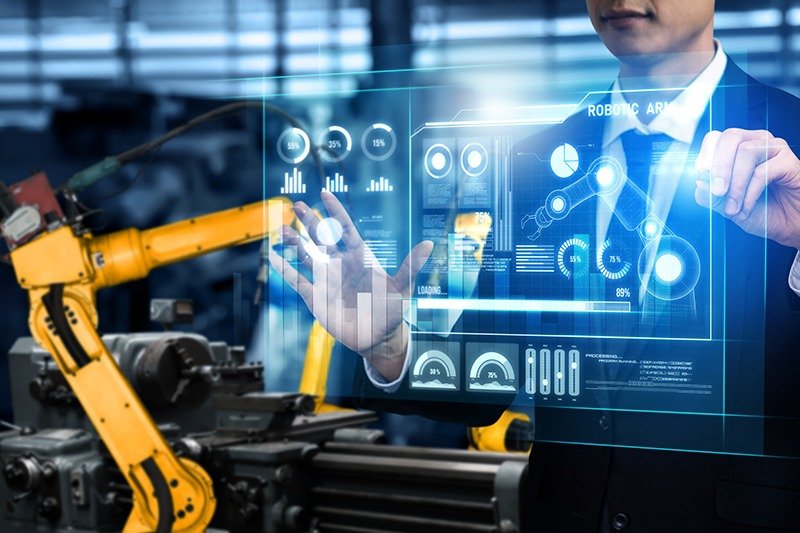
Reinforcement learning in robotic inspection is rapidly transforming how industries approach quality assurance, maintenance, and safety. By enabling robots to learn optimal inspection strategies through trial and error, this branch of artificial intelligence is making automated inspection more adaptive, efficient, and reliable. As manufacturing, energy, and infrastructure sectors demand higher standards and flexibility, the integration of reinforcement learning (RL) into robotic systems is becoming a key differentiator.
In this article, we explore how RL is applied to robotic inspection, its benefits over traditional automation, and the challenges that come with deploying these advanced systems. We’ll also highlight real-world use cases and provide resources for further exploration, including insights on retraining strategies for AI inspection to keep learning-based models performing at their best.
Understanding the Role of Reinforcement Learning in Automated Inspection
Traditional robotic inspection systems rely on pre-programmed routines and static rules. While effective for repetitive tasks, these systems can struggle with variability, unexpected defects, or dynamic environments. Reinforcement learning in robotic inspection introduces a paradigm shift by allowing robots to learn from their environment and adapt their inspection strategies over time.
In RL, an agent (the robot) interacts with its environment, receiving feedback in the form of rewards or penalties based on its actions. Over thousands or millions of iterations, the robot learns which actions maximize its cumulative reward—such as finding more defects, reducing inspection time, or minimizing false positives.
Key Benefits of RL-Based Inspection Robots
Adopting RL in inspection brings several advantages over conventional approaches:
- Adaptability: Robots can adjust to new product types, changing lighting, or unexpected obstacles without reprogramming.
- Continuous Improvement: RL agents improve their performance as they gain more experience, leading to higher inspection accuracy and efficiency.
- Reduced Human Intervention: Less manual oversight is needed, freeing up skilled workers for higher-value tasks.
- Handling Complex Environments: RL enables robots to inspect in cluttered, hazardous, or hard-to-reach areas where traditional automation may fail.

How RL Algorithms Power Modern Inspection Systems
The core of reinforcement learning in robotic inspection lies in the agent’s ability to learn a policy—a mapping from observed states to optimal actions. Popular RL algorithms such as Q-learning, Deep Q-Networks (DQN), and Proximal Policy Optimization (PPO) are used to train robots for inspection tasks.
The process typically involves:
- Simulation Training: Robots are first trained in simulated environments to explore a wide range of scenarios safely and efficiently.
- Reward Engineering: Designers define reward functions that encourage desired behaviors, such as detecting subtle defects or minimizing inspection time.
- Transfer to Real World: Once the agent performs well in simulation, its policy is transferred to physical robots, often with additional fine-tuning.
- Continuous Learning: Some systems allow robots to keep learning on the job, adapting to new challenges as they arise.
For industries facing data limitations, strategies like overcoming data scarcity in inspection are crucial for effective RL deployment.
Industrial Applications and Use Cases
RL-powered inspection robots are making an impact across various sectors:
- Manufacturing: Detecting surface defects, dimensional inaccuracies, or assembly errors on production lines.
- Energy: Inspecting wind turbines, solar panels, and pipelines for wear, corrosion, or damage.
- Infrastructure: Monitoring bridges, tunnels, and railways for cracks, misalignments, or other safety hazards.
- Electronics: Ensuring the quality of circuit boards and microchips through high-resolution visual inspection.
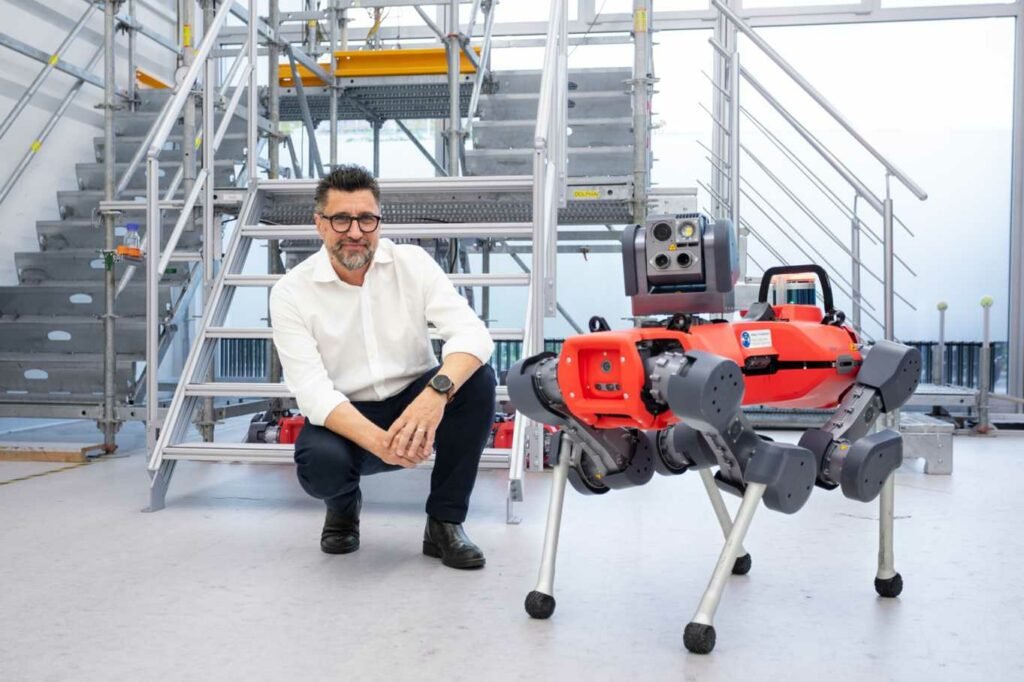
For example, in solar panel manufacturing, RL-driven robots can adapt their inspection paths to account for panel orientation, lighting changes, and subtle defect patterns—improving both speed and defect detection rates.
Challenges in Deploying RL for Inspection Tasks
Despite its promise, implementing reinforcement learning in robotic inspection comes with technical and operational hurdles:
- Data Requirements: RL often needs large volumes of interaction data, which can be costly or time-consuming to collect in real environments.
- Safety Concerns: Robots learning through trial and error may take unsafe actions, especially in high-stakes or safety-critical settings. Approaches such as safety-critical AI decision making are essential for mitigating risks.
- Generalization: Policies learned in simulation may not always transfer perfectly to the real world due to the “reality gap.”
- Computational Demands: Training deep RL models can require significant computing resources and expertise.
To address these challenges, organizations are investing in hybrid approaches, combining RL with supervised learning, domain adaptation, and robust simulation environments.
Best Practices for Implementing RL in Inspection Workflows
For companies considering RL-based robotic inspection, several best practices can improve outcomes:
- Start with simulation to accelerate learning and reduce risk.
- Carefully design reward functions to align with inspection goals.
- Use domain randomization to help agents generalize from simulation to reality.
- Regularly update and retrain models using retraining strategies for AI inspection to maintain accuracy as conditions change.
- Incorporate human oversight, especially in the early deployment stages.
Integrating RL with Other AI Technologies
RL is often most effective when combined with other AI techniques. For example, integrating vision models such as vision transformers for industrial use can enhance the robot’s ability to interpret complex visual data. Similarly, risk-aware planning and risk management in ai inspection frameworks help ensure that learning-based systems meet safety and compliance requirements.
The synergy between RL, computer vision, and traditional control methods is driving a new generation of inspection robots that are more intelligent, flexible, and robust.
Impact on Quality Control and Business Outcomes
The adoption of RL in inspection processes is delivering measurable business benefits. Companies report higher product quality, reduced downtime, and lower inspection costs. By automating complex inspection tasks, RL enables organizations to scale their quality control operations and respond faster to production changes or new regulations.
For a broader perspective on the advantages of AI-driven quality control, see this overview of AI’s key benefits in quality control.
Frequently Asked Questions
How does reinforcement learning differ from traditional automation in inspection?
Traditional automation uses fixed rules and routines, making it less flexible in dynamic or unpredictable environments. Reinforcement learning enables robots to learn and adapt their inspection strategies based on real-time feedback, improving their ability to handle variability and new challenges.
What industries benefit most from RL-powered inspection robots?
Industries with complex, variable, or safety-critical inspection needs—such as manufacturing, energy, infrastructure, and electronics—see the greatest benefits. RL allows robots to adapt to different products, environments, and defect types, increasing inspection accuracy and efficiency.
What are the main challenges in deploying RL for inspection tasks?
Key challenges include the need for large amounts of training data, ensuring safety during learning, transferring policies from simulation to real-world settings, and managing the computational demands of training advanced RL models.
Conclusion
Reinforcement learning in robotic inspection is reshaping how industries approach quality control, maintenance, and safety. By enabling robots to learn and adapt, RL delivers greater flexibility, efficiency, and accuracy than traditional automation. As the technology matures, its integration with other AI methods and robust retraining strategies will be essential for maximizing impact and ensuring safe, reliable operation.